

Who Was Paul McCobb?
Paul McCobb (1917–1969) was one of the defining designers of American mid-century modernism — a name that commands serious attention among collectors today. Working primarily from the late 1940s through the 1960s, McCobb created furniture that balanced honest Scandinavian-inspired simplicity with the practicality demanded by postwar American households. His work was modern without being cold, affordable without being cheap — a combination that made him one of the most commercially successful designers of his era.
Born in Gloucester, Massachusetts, McCobb trained at the Vesper George School of Art in Boston before moving into interior design and retail display. His breakthrough came when he began designing for Winchendon Furniture in the early 1950s, and the rest is collector history.
The Major Collections
Planner Group (1950–1960s)
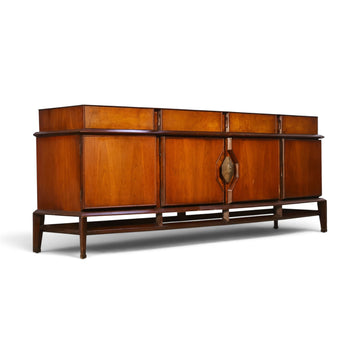
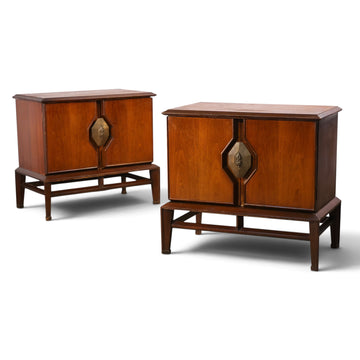
The Planner Group is the collection that made McCobb a household name. Manufactured by Winchendon Furniture of Massachusetts and retailed through major department stores, these modular pieces were designed to be mixed, matched, and rearranged as life changed. Clean-lined cases in maple or birch with wrought-iron legs became the signature look — democratic modernism you could actually afford in 1955.
What makes Planner Group so collectible today: the pieces work beautifully together decades later. A Planner Group credenza paired with a Planner Group desk or bookcase creates a coherent, room-defining statement. Look for the Winchendon label on drawer interiors.
Directional Collection
Manufactured by Calvin Furniture of Grand Rapids, the Directional line represented McCobb's move upmarket. Higher-end materials, more refined joinery, and a price point that put it in luxury showrooms. Directional pieces are rarer and command premium prices — a Directional sofa or lounge chair in original upholstery is a serious find.
Predictor Group for O'Hearn
Another Winchendon collaboration, the Predictor Group brought a slightly more rectilinear, architecturally assertive sensibility. Taller proportions, stronger horizontal lines. Less commonly found than Planner Group pieces, which makes condition-sound examples especially desirable.
Linear Group
The Linear Group for Arbuck pushed McCobb's minimalism further — slender frames, open cane panels, and a lightness that anticipated the 1960s California style. These pieces are among the most refined of his output and appear less frequently on the market.
What to Look For: Identifying Authentic McCobb
Authentic Paul McCobb pieces typically carry maker's labels on drawer interiors, cabinet backs, or underside of case pieces. Common markings include Winchendon Furniture Co., Calvin Furniture, or Arbuck Inc. Some pieces carry a McCobb signature stamp alongside the manufacturer label.
The signature Planner Group aesthetic: tapered or hairpin-style wrought-iron legs (often with brass ferrule feet), solid maple or birch carcasses with a warm honey finish, simple brass or aluminum hardware, and drawer fronts with clean reveals. Reproductions exist but typically lack the quality of joinery and the weight of solid hardwood.
Condition
Paul McCobb furniture has appreciated steadily as mid-century modern collecting has matured. Here's a rough current market range:
- Planner Group credenza / sideboard: $800–$2,500 depending on size, finish condition, and leg integrity
- Planner Group desk: $600–$1,800
- Planner Group dresser / chest: $500–$1,400
- Directional lounge chair (original upholstery): $1,200–$3,500
- Linear Group pieces: $400–$2,000
- Adrian Pearsall Furniture: The Complete Collector's Guide
- Danish Modern Furniture: The Complete Collector's Guide
- Vladimir Kagan Furniture: The Complete Collector's Guide
- Harvey Probber Furniture: The Complete Collector's Guide
- How to Style a Mid-Century Modern Living Room
The biggest value killers: missing or replaced legs (original Winchendon wrought-iron legs are irreplaceable), veneer damage on case tops, non-original hardware, and stripped or painted finishes. A Planner Group credenza with all original iron legs, clean top, and working drawers is worth two or three times a comparable piece with replaced furniture-store legs.
Restoration: What's Worth Doing
McCobb's finishes were typically lacquered maple or birch — warm, light, and relatively durable. Professional restoration of these pieces focuses on:
- Surface refresh: Clean stripped finish, light sanding, matched lacquer re-coat. Preserves grain and patina without wholesale refinishing.
- Hardware restoration: Original pulls are brass or aluminum. Polished or lacquer-protected originals are preferable to replacements; period-correct hardware sourced from other McCobb pieces is acceptable.
- Leg integrity: Wrought-iron leg welds should be inspected and re-reinforced if loose. Rubber feet replaced if missing.
- Drawer fitting: Wood movement over 70 years sometimes makes drawers sticky. Light waxing and planing where needed keeps them operating as intended.
What to leave alone: original labels, manufacturer stamps, and any original finish sections that are stable. These are authentication markers and value anchors.
Collecting Strategy
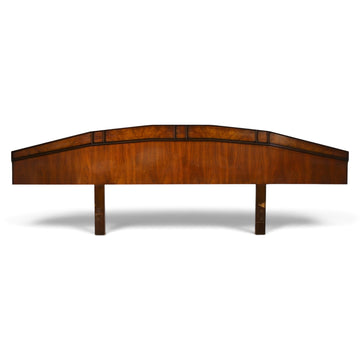
The most rewarding McCobb collections are built around a single line — ideally Planner Group — acquiring pieces that work together. A complete Planner Group bedroom set (dresser, chest, headboard, nightstands) or a home-office grouping (desk, bookcase, credenza) is worth meaningfully more as a coherent set than as individual pieces sold separately.
Look for:
- Consistent finish tone across pieces (easier in Planner Group, which used a fairly standardized lacquer)
- Original legs on all pieces
- Matching hardware across the grouping
- Clean interiors (drawer boxes, shelf surfaces)
Frequently Asked Questions
How do I identify Paul McCobb furniture?
Look for manufacturer labels from Winchendon Furniture, Calvin Furniture, or Arbuck Inc. on drawer interiors, cabinet backs, or undersides. Planner Group pieces feature signature wrought-iron legs, warm maple or birch carcasses, and simple brass or aluminum hardware. A McCobb signature stamp sometimes accompanies the manufacturer label.
What is Paul McCobb Planner Group furniture worth?
Planner Group credenzas typically sell for $800–$2,500; desks $600–$1,800; dressers $500–$1,400. Condition of the top surface, integrity of original wrought-iron legs, and originality of hardware are the primary value drivers.
Is Paul McCobb furniture good quality?
Yes — McCobb's Planner Group and other lines were manufactured from solid hardwoods (maple, birch) with quality joinery for their price point. Seventy-year-old pieces regularly survive in excellent functional condition with minimal restoration, which speaks to build quality above the midcentury norm.
What's the difference between McCobb's Planner Group and Directional collections?
The Planner Group (Winchendon) was McCobb's accessible, modular line designed for the mass market — honest materials, clean lines, wrought-iron legs. The Directional collection (Calvin Furniture) was an upmarket line with higher-end materials and refined craftsmanship, originally sold through luxury showrooms. Directional pieces are rarer and command premium prices.
Further Reading
- How to Value Vintage Mid-Century Modern Furniture
- Broyhill Brasilia Furniture: The Complete Collector's Guide
- Lane Furniture Collector's Guide
- Drexel Furniture Collector's Guide
Currently in Our Shop
Browse authentic Paul McCobb pieces currently available in our collection:


