

What Is Danish Modern Furniture?
Danish modern is a design movement that emerged from Denmark in the 1940s and reached its international peak through the 1950s and 1960s. It is characterized by clean organic forms, exceptional craftsmanship, honest use of natural materials — primarily teak, rosewood, and oak — and an unwavering commitment to function. Where American modernism sometimes traded craft for manufacturing efficiency, Danish modern placed the hand of the maker at the center of the work.
The movement grew from Danish craft traditions and design schools, most notably the Royal Danish Academy of Fine Arts. It was exported globally through Danish furniture manufacturers and design showrooms, and became shorthand for a certain quality of modernism that remains as desirable now as it was in 1958.
The Defining Designers
Hans J. Wegner (1914–2007)
Hans Wegner is arguably the single most important figure in Danish furniture design. Over a career spanning more than sixty years, he designed over 500 chairs — each one a masterclass in how wood, joinery, and human ergonomics intersect. His most celebrated pieces include the Round Chair (the one that Americans called simply "The Chair" after appearing in the Kennedy-Nixon televised debate), the Wishbone Chair (Y Chair), the Shell Chair, the Ox Chair, and the Peacock Chair.
Wegner worked with multiple manufacturers: Carl Hansen & Son (where the Wishbone Chair originated and remains in continuous production), PP Møbler (where many of his most refined pieces are made), and Johannes Hansen (who produced the Round Chair). Vintage examples from original production runs are significantly more valuable than later reissues.
Arne Jacobsen (1902–1971)
Arne Jacobsen was an architect whose furniture designs became icons of 20th-century design. The Ant Chair (1952), the Series 7 Chair (1955), the Egg Chair (1958), and the Swan Chair (1958) are among the most recognized furniture forms in history. Manufactured by Fritz Hansen, these pieces remain in production — which makes authentication of vintage originals important for collectors.
Vintage Egg and Swan chairs from the 1960s–70s differ from modern production in upholstery materials, foam composition, and base casting. Original examples with period upholstery or confirmed provenance command substantially higher prices than later production.
Børge Mogensen (1914–1972)
Where Wegner pursued refinement and Jacobsen pursued sculptural drama, Børge Mogensen pursued utility. His furniture is among the most architecturally restrained in the Danish modern canon — pieces designed to work hard and last generations. The Spanish Chair, the Hunting Chair, and his various sofa and shelving systems for FDB Møbler and Fredericia remain highly collectible. Mogensen pieces are often underpriced relative to their quality and longevity.
Finn Juhl (1912–1989)
Finn Juhl was the poet of Danish modern — his pieces have a sculptural, sometimes anthropomorphic quality that sets them apart. The Chieftain Chair, the Pelican Chair, and the NV45 lounge chair pushed furniture toward something closer to fine art. Juhl worked primarily with cabinetmaker Niels Vodder, which means original production pieces were made in small numbers by a single craftsman. Authentic Juhl originals are accordingly rare and expensive.
Poul Kjærholm (1929–1980)
Kjærholm was the outlier in Danish modern — where his contemporaries worked in wood, he worked in steel and natural fiber. His PK series (PK22 lounge chair, PK80 daybed, PK61 coffee table) combined industrial materials with the precision of Danish craft. Manufactured by E. Kold Christensen and later Fritz Hansen, Kjærholm pieces are among the most architecturally influential in the movement.
Key Manufacturers
Understanding who made a piece is as important as knowing who designed it. The major Danish modern manufacturers:
- Carl Hansen & Son: Primary manufacturer of Wegner's Wishbone Chair and many others; still in production
- Fritz Hansen: Jacobsen's manufacturer; Egg Chair, Swan Chair, Series 7 still in production
- PP Møbler: Wegner's preferred workshop for his most refined work; small-batch production
- Fredericia: Mogensen's primary manufacturer for seating
- France & Søn / Cado: Major exporter of Danish teak case goods to the US market
- Bramin: Teak dining furniture widely exported to the US and UK
- Vladimir Kagan Furniture: The Complete Collector's Guide
- Harvey Probber Furniture: The Complete Collector's Guide
- How to Style a Mid-Century Modern Living Room
Teak Case Goods: The Danish Modern You'll Actually Find
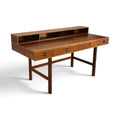
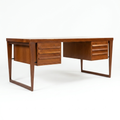
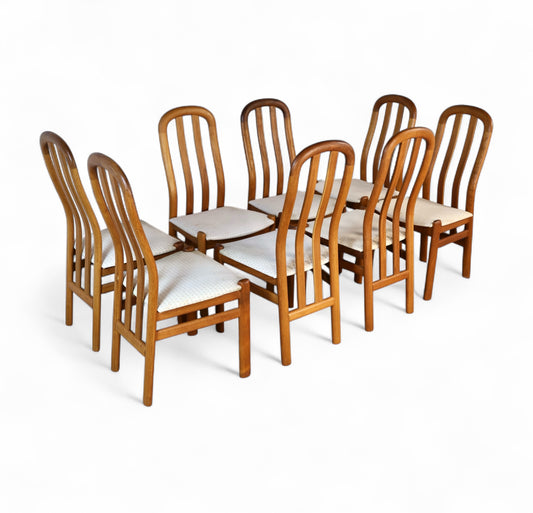
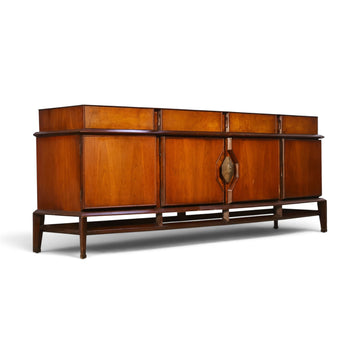
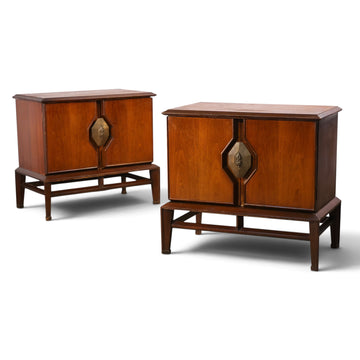
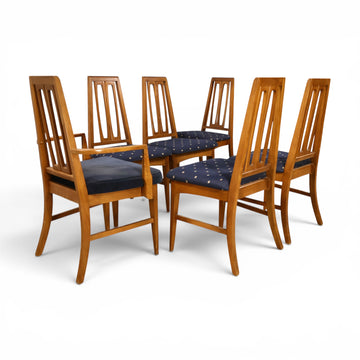
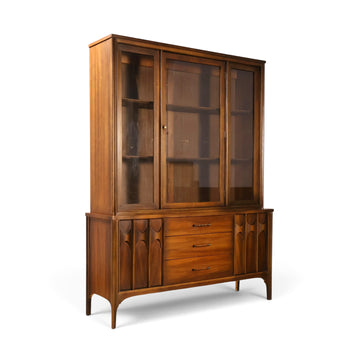
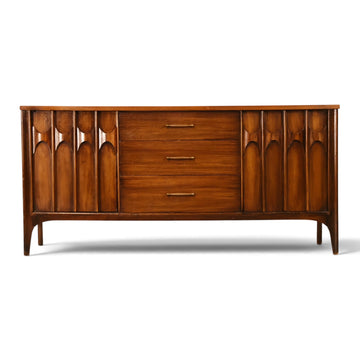
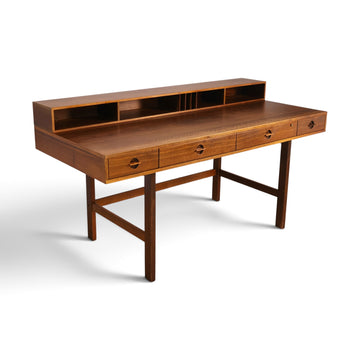
While Wegner chairs and Jacobsen Egg Chairs capture the headlines, the Danish modern furniture most commonly found in the American vintage market is teak case goods — sideboards, dining tables, dining chairs, bookcases, and bedroom sets — made by manufacturers like France & Søn, Bramin, Skovby, and dozens of others that exported heavily to the US in the 1960s and 70s.
These pieces are among the best value in vintage furniture: solid teak construction, clean-lined Danish modern aesthetics, excellent joinery, and a scale that works in modern homes. A France & Søn teak sideboard in sound condition is a remarkable piece of furniture at a fraction of what comparable American production of the era costs.
Authentication and Identification
Danish modern pieces typically carry manufacturer stamps, paper labels, or brass identification plates. Common locations: underside of case tops, back panel interiors, seat rail undersides on chairs. Labels often carry both the manufacturer name and the designer credit.
For iconic Wegner and Jacobsen pieces: modern production from Carl Hansen, Fritz Hansen, and PP Møbler continues — which creates a market for pieces represented as vintage that are in fact current production. Key tells for genuine vintage: appropriate aging on wood and metal surfaces, original upholstery materials (cotton, wool, period leathers), earlier base casting methods visible in leg or base undersides.
Frequently Asked Questions
What makes furniture "Danish modern"?
Danish modern refers to furniture produced in Denmark from the 1940s–1970s, characterized by clean organic forms, exceptional craftsmanship, honest use of natural materials (primarily teak and rosewood), and a functional design philosophy. Leading designers include Hans Wegner, Arne Jacobsen, Børge Mogensen, and Finn Juhl.
How do I identify vintage Danish modern furniture?
Look for manufacturer stamps, paper labels, or brass identification plates on the underside of case tops, back panel interiors, or seat rail undersides. Common makers include Carl Hansen, Fritz Hansen, France & Son, and Bramin. Genuine vintage pieces show appropriate wood aging, original upholstery materials, and period-correct hardware.
Is Danish modern furniture a good investment?
Danish modern furniture has appreciated steadily over decades. Designer pieces by Wegner, Jacobsen, and Juhl have seen significant value increases. More accessible teak case goods from manufacturers like France & Son offer excellent quality at lower price points. Condition, authentication, and provenance are the key value drivers across the category.
What wood is used in Danish modern furniture?
Teak is the most common wood in Danish modern furniture exported to the US, valued for its durability, warm color, and tight grain. Rosewood was used for higher-end pieces before trade restrictions made it scarce. Oak and beech appear in earlier and more utilitarian pieces. Solid wood construction — not veneer on particleboard — is the standard for quality Danish modern.
Further Reading
- Vintage Teak Furniture Buyer's Guide
- How to Value Vintage Mid-Century Modern Furniture
- Scandinavian vs. American Mid-Century Modern Furniture
- How to Authenticate Vintage Mid-Century Modern Furniture
- Paul McCobb Furniture: The Complete Collector's Guide
- Arne Jacobsen Furniture Collector's Guide — Egg Chair, Swan Chair, Series 7, and the iconic designs that defined Danish modernism at its peak.
Further Reading
- Jens Risom Furniture Collector's Guide — Another pillar of Scandinavian design, Risom brought Danish sensibility to American living rooms through his landmark Knoll collaboration.
- T.H. Robsjohn-Gibbings Furniture Collector's Guide — A kindred spirit who blended classical roots with modernist restraint, equally collectible to serious MCM buyers.
- Danish Modern Furniture Buyer's Guide: Designers, Styles & What to Buy
- Finn Juhl Furniture Collector's Guide
- Børge Mogensen Furniture Collector's Guide