

Vintage Teak Furniture Buyer's Guide: Everything You Need to Know
Vintage teak furniture represents some of the finest craftsmanship of the mid-century modern era. Prized for its incredible durability, rich golden-brown grain, and timeless aesthetic, teak became the wood of choice for Scandinavian designers throughout the 1950s and 1960s. Whether you're hunting for a Hans Wegner teak dining table, a Kai Kristiansen bookcase, or a Danish teak credenza for your living room, this guide will help you shop smarter and avoid common pitfalls.
Why Teak Became the Defining Wood of Mid-Century Modern Design
Teak's rise to prominence in postwar Scandinavian furniture design was no accident. Danish, Swedish, and Norwegian designers discovered that teak offered a perfect combination of properties that suited both their aesthetic vision and practical needs:
- Natural oils make teak highly resistant to moisture, rot, and insects — furniture built in 1960 still looks beautiful today.
- Exceptional workability allowed craftsmen to achieve the clean lines and organic curves that define MCM style.
- Rich, warm grain ranges from straight to interlocked patterns, giving each piece a unique character.
- Dimensional stability means teak resists warping and checking, even in changing humidity.
- How to Buy Vintage Furniture Online: A Complete Guide
- How to Ship Vintage Furniture: What Every Buyer Needs to Know
- How to Care for Vintage Wood Furniture: A Complete Maintenance Guide
Designers like Hans Wegner, Arne Vodder, Finn Juhl, and Børge Mogensen all created iconic pieces in teak. Danish furniture companies including Skovby, Dyrlund, and HW Klein produced thousands of teak pieces that are now highly collectible.
How to Identify Genuine Vintage Teak
Not all "teak-colored" furniture is actually teak. Here's how to verify authenticity before you buy:
- Color and grain: True teak has a golden-brown to medium-brown color with a straight or slightly wavy grain. Look for the distinctive "chatoyance" (shimmer) when light catches the surface at different angles.
- Weight: Teak is a dense hardwood — pieces feel noticeably heavy for their size. If a "teak" dresser feels surprisingly light, it may be a veneer over particleboard.
- The smell test: Fresh-cut or sanded teak has a distinctive leathery, slightly oily aroma. This fades over decades but may still be detectable in drawers or unexposed areas.
- Oiliness: Run your finger across an unfinished or lightly finished area. Genuine teak leaves a very slight oily residue.
- Maker's marks: Look for labels, stamps, or dovetail-carved marks on the underside of drawers, the back of case pieces, or the bottom of chair seats. Danish pieces often have a "Made in Denmark" stamp.
Solid Teak vs. Teak Veneer: What's the Difference?
Much of the vintage MCM teak furniture you'll encounter is actually teak veneer over a solid wood substrate — often pine, birch, or oak. This is not necessarily a negative:
- Solid teak pieces command higher prices and are more durable for refinishing. Look for solid teak in chair legs, table bases, and smaller decorative pieces.
- Teak veneer was standard for case goods (dressers, credenzas, sideboards). Quality vintage veneer pieces from the 1950s–1970s used real teak veneer over solid wood substrate — not particleboard — and can last for generations with proper care.
- Avoid pieces where veneer is lifting, bubbling, or has water damage along edges. These repairs are costly and may not be worth it on lower-value pieces.
What Types of Vintage Teak Furniture Are Most Collectible?
The vintage teak market is broad. Here are the most sought-after categories:
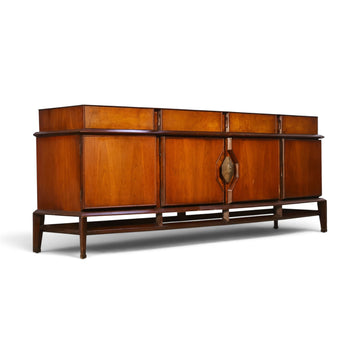
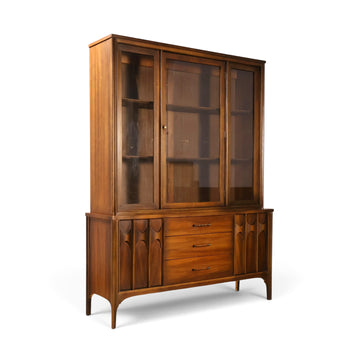
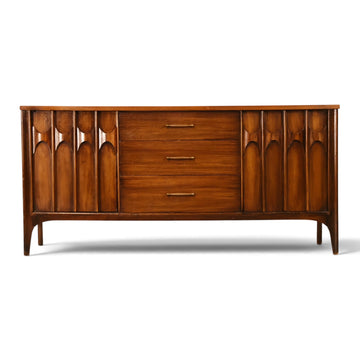
- Danish teak credenzas and sideboards: The cornerstone of any MCM interior. Look for pieces with sliding doors, hairpin or tapered legs, and interior shelving or drawers. Makers like Skovby, HW Klein, and Dyrlund are well regarded.
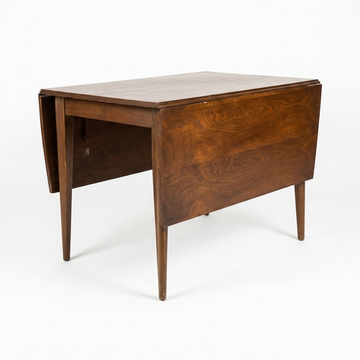
- Teak dining tables: Extension tables with self-storing leaves are particularly prized. Hans Wegner, Arne Vodder, and Børge Mogensen all designed iconic teak dining tables.
- Teak dressers and tallboys: Danish bedroom furniture in teak often features beautiful wood grain on drawer fronts and subtle brass or teak pulls.
- Teak lounge chairs: Papa Bear chairs, shell chairs, and sling chairs with teak frames are enduring classics.
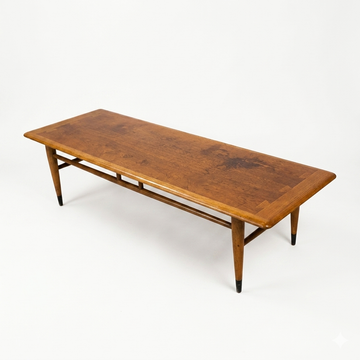
- Teak coffee tables: Oval, surfboard, and boomerang shapes are MCM icons. Many feature lower shelves or magazine racks.
- Teak bookshelves and wall units: Danish teak wall units from the 1960s are highly functional and extremely popular in contemporary interiors.
Condition Guide: What to Look For and Avoid
Condition is the single biggest factor in vintage teak pricing:
- Original finish: A piece with its original oil finish (often hardened and slightly darkened) is generally more desirable than one that has been repainted or varnished.
- Water rings and stains: Light surface stains can often be removed with Danish oil or a light sand-and-oil treatment. Deep water damage that has penetrated the wood is more serious.
- Scratches: Light scratches in teak can be sanded out. Deep gouges may require more extensive work.
- Structural integrity: Check all joints — particularly chair joints, which bear significant stress. Loose mortise-and-tenon joints can be re-glued; broken joints or cracked rails are more serious.
- Missing hardware: Original teak pulls and brass hardware can be hard to source. Factor replacement costs into your offer.
How to Care for and Restore Vintage Teak Furniture
Teak is remarkably low-maintenance compared to other hardwoods:
- Cleaning: Wipe with a damp cloth and mild soap. Avoid harsh chemicals that strip the natural oils.
- Oiling: Apply teak oil or Danish oil once or twice a year to restore luster and protect the wood. Work into the grain with a cloth, let penetrate for 20–30 minutes, then buff off the excess.
- Sunlight: Teak fades to a silver-gray with prolonged UV exposure. Keep pieces out of direct sunlight or use UV-filtering window film to preserve color.
- Refinishing: A professional restoration involves light sanding (starting with 150-grit), followed by progressively finer grits, and finishing with Danish oil or teak oil. This can make a tired piece look new.
At Mod City Mad, we offer professionally restored vintage teak furniture that has been carefully cleaned, re-oiled, and structurally tightened — ready to bring into your home.
Pricing Guide: What Does Vintage Teak Furniture Cost?
Prices vary widely based on maker, condition, and form. General ranges in today's market:
- Teak credenzas/sideboards: $400–$2,500 for unattributed Danish pieces; $2,000–$8,000+ for designer-attributed pieces
- Teak dining tables: $300–$1,500 for standard pieces; much higher for Wegner or Juhl originals
- Teak dressers: $300–$1,200 for quality Danish examples
- Teak coffee tables: $200–$800 for standard MCM examples
- Teak lounge chairs: $300–$1,500+ depending on style and condition
Always buy from reputable dealers who provide clear photos of condition, maker information when available, and accurate dimensions.
Shop Vintage Teak Furniture at Mod City Mad
We curate a rotating inventory of authentic vintage teak furniture from the 1950s, 1960s, and 1970s — sourced from estates, dealers, and private collections. Every piece is carefully inspected, accurately described, and available as-is or fully restored.
Browse our current teak inventory: