

The Ultimate Guide to Mid-Century Modern Credenzas: History, Styles, and Buying Tips
Few pieces of furniture capture the spirit of mid-century modern design as perfectly as the credenza. Low-slung, horizontal, and endlessly functional, the MCM credenza became a staple of postwar American and Scandinavian homes — and today it remains one of the most coveted vintage furniture forms on the market. Whether you're looking for a Danish teak sideboard for your dining room or a sleek American walnut credenza for your home office, this guide covers everything you need to know.
What Is a Credenza? A Brief History
The word "credenza" comes from the Italian for "belief" or "trust" — originally referring to a side table where food was tasted before being served to a lord. By the mid-20th century, the term had evolved to describe a low, horizontal cabinet with legs, typically placed against a wall in a dining room, living room, or office.
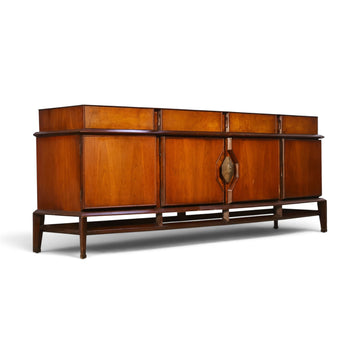
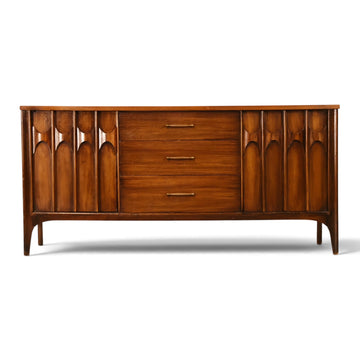
During the 1950s and 1960s, American and Scandinavian designers transformed the credenza into one of the defining objects of modernist interior design. These pieces married form and function: beautiful natural wood exteriors (teak, walnut, rosewood) with practical interior storage — shelves, drawers, and compartments for china, linens, barware, and records.
Key Styles of Mid-Century Modern Credenzas
Danish Modern Teak Credenzas
Scandinavian credenzas from the 1950s–1970s are among the most collectible. Characterized by teak or rosewood exteriors, sliding tambour or panel doors, and tapered or hairpin legs, these pieces epitomize the "less is more" Scandinavian philosophy. Makers like Skovby, HW Klein, Dyrlund, and Kai Kristiansen produced countless variations. Look for the "Made in Denmark" stamp on the underside.
American Walnut Credenzas
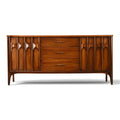
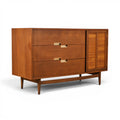
American furniture makers like Bassett, Drexel, Lane, and Stanley produced credenzas in walnut throughout the 1950s–1970s. These often feature bowed or tapered legs, geometric cane inserts, and interior shelving. Lane's "Acclaim" and "Perception" lines are particularly sought after. Heritage and Drexel "Declaration" pieces command premium prices.
Designer and Studio Credenzas
High-end credenzas designed by known names like Florence Knoll, George Nelson, Paul McCobb, and Adrian Pearsall are at the top of the collectibility spectrum. Florence Knoll's walnut credenzas for Knoll Associates are museum-quality objects. George Nelson's "Thin Edge" cases for Herman Miller are icons of modernist furniture design.
Rosewood Credenzas
Brazilian rosewood (Jacaranda) credenzas from the 1960s are among the rarest and most valuable MCM pieces. Their distinctive dark, richly grained wood and striking appearance make them statement pieces. Due to international trade restrictions on Brazilian rosewood, authentic vintage pieces are increasingly valuable.
How to Identify a Quality Vintage Credenza
Not all credenzas are created equal. Here's what separates a quality vintage piece from a mediocre reproduction:
- Joinery: Look for dovetail drawer joints — a mark of quality craftsmanship. Machine-cut dovetails are acceptable in mid-century production furniture; hand-cut dovetails indicate higher-end or studio pieces.
- Leg construction: Legs should be solid wood (not hollow plastic) and securely attached. Check for wobble — loose legs can usually be re-glued, but cracked leg joints are more serious.
- Hardware: Original hardware (teak pulls, brass bar handles, recessed metal pulls) adds value. Replaced hardware is not a dealbreaker but may affect price.
- Interior: Check drawer slides, shelf brackets, and door hinges. Tambour doors (the slatted rolling type) should slide smoothly — stuck or broken tambours are a costly repair.
- Maker's marks: Many Danish and American pieces have manufacturer's labels on the underside. Research the maker before buying — some brands command significant premiums.
- How to Buy Vintage Furniture Online: A Complete Guide
- How to Ship Vintage Furniture: What Every Buyer Needs to Know
- How to Care for Vintage Wood Furniture: A Complete Maintenance Guide
- How to Design a Mid-Century Modern Home Office
Common Credenza Problems and What They Cost to Fix
- Veneer lifting or bubbling: Common on surfaces that have seen water or heat. Small areas can be re-glued; large areas may require professional re-veneering. Budget $150–$500+ depending on scope.
- Stuck or broken tambour doors: Tambour slats dry out and crack over decades. Repair requires specialist skills. Budget $200–$600 for tambour repair.
- Missing or broken legs: Replacement legs can sometimes be sourced from specialty suppliers or turned custom. Budget $50–$200 per leg for custom turning.
- Warped doors: Solid wood doors that have warped may need planing or, in severe cases, replacement. Budget $75–$300.
- Water stains on top surface: Light stains can often be removed with light sanding and re-oiling. Deep stains may require more extensive refinishing. Budget $100–$400.
Sizing Your Credenza: What You Need to Know
Standard MCM credenzas range from 48 inches to 84 inches wide. Before you buy, measure your wall space carefully:
- 48–54 inches: Ideal for smaller dining rooms or home offices. Fits comfortably against most walls.
- 60–72 inches: The most common "standard" size. Works well as a dining room sideboard or living room media console.
- 78–84 inches: Statement pieces for large dining rooms or open-plan spaces. These longer credenzas often have a more dramatic visual impact.
Also consider height (typically 28–32 inches) and depth (typically 16–20 inches). Most MCM credenzas are the right height to serve as media consoles for modern flat-screen TVs, making them extremely practical for contemporary use.
Credenza Pricing: What to Expect in Today's Market
- Unattributed Danish teak credenza (good condition): $600–$1,800
- American walnut credenza (Lane, Bassett, Drexel): $400–$1,200
- Designer-attributed (Florence Knoll, George Nelson): $3,000–$15,000+
- Rosewood credenza: $1,500–$6,000+
- Professionally restored credenza: Add 20–50% premium over as-is comparable
How to Style a Mid-Century Modern Credenza in Your Home
Credenzas are extraordinarily versatile. Here are the most popular uses in contemporary interiors:
- Dining room sideboard: Store china, linens, and barware inside; display art objects, candles, or plants on top.
- Living room media console: Most MCM credenzas are the perfect height for a flat-screen TV. Route cables discreetly through the back.
- Home office credenza: Use as a filing cabinet and printer stand. The horizontal surface creates additional workspace.
- Entry hall storage: A credenza in an entryway is both beautiful and practical for keys, mail, and everyday items.
- Bedroom dresser: A 60"+ credenza works beautifully as a low dresser in a bedroom with a mirror hung above.
Shop Mid-Century Modern Credenzas at Mod City Mad
We maintain a curated inventory of authentic vintage MCM credenzas — Danish teak, American walnut, and everything in between. Every piece is carefully inspected and accurately described, available as-is or fully restored by our skilled craftspeople.
Further Reading
- Vintage Teak Furniture Buyer's Guide
- How to Identify Authentic Vintage MCM Furniture
- MCM Furniture Restoration Guide
- Most Collectible MCM Furniture Brands
- Vintage Credenza Buyer's Guide: Styles, Makers & What to Look For — a deeper dive into evaluating and buying vintage credenzas by style and maker.