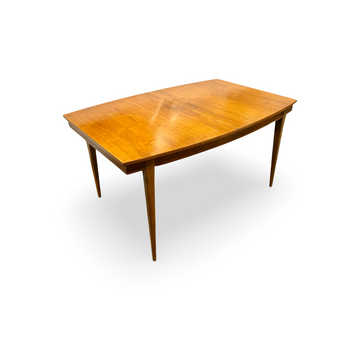
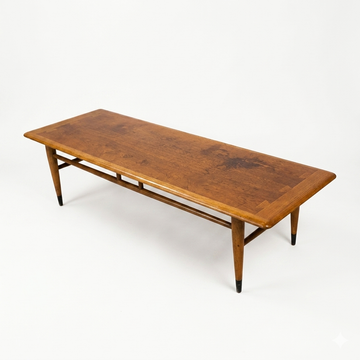
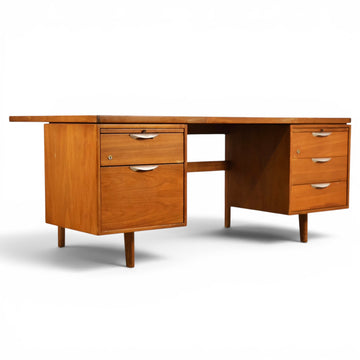
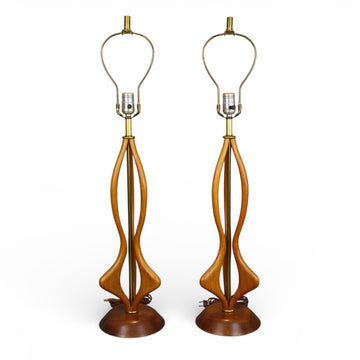

The home office has become one of the most important rooms in the house — and one where design choices matter enormously for both productivity and daily quality of life. Mid-century modern furniture is an ideal choice for the home office: the aesthetic is sophisticated without being stuffy, the functional pieces (desks, storage, seating) were designed with intent and craftsmanship, and the warm walnut tones work with almost any room color scheme. This guide walks through every element of designing a beautiful, functional MCM home office — from the desk outward.
The MCM Desk: The Heart of the Home Office
The desk defines a home office. In the MCM era, designers and manufacturers produced some of the most beautifully functional desks ever made — pieces that understood that a desk is both a work surface and a piece of furniture that spends most of its hours in plain sight.
Types of MCM Desks
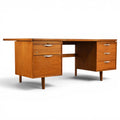
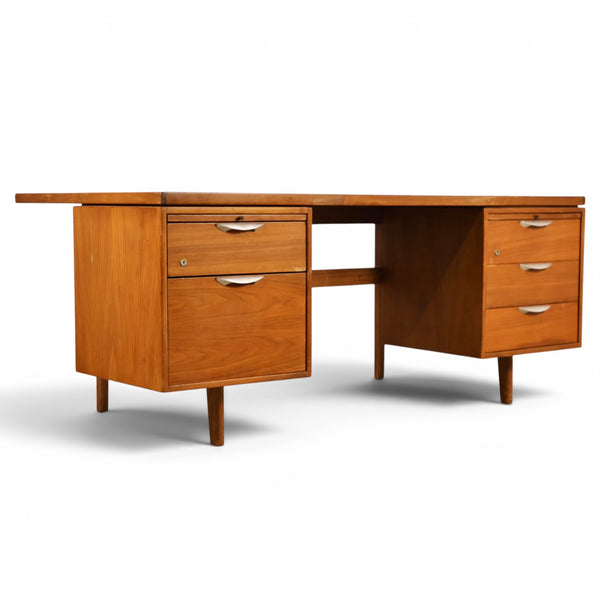
Executive desks: Large, L-shaped or rectangular desks with substantial case construction, often with drawer pedestals on one or both sides. These are the power desks of the MCM world — built for serious work and serious visual presence. Common in walnut veneer with leather or glass tops.
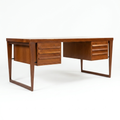
Writing desks: Smaller, cleaner-lined desks with a single work surface and minimal storage. The Scandinavian MCM tradition produced exceptional writing desks — teak and rosewood pieces with legs that seem impossibly slender yet perfectly proportioned. Great for smaller offices or apartments.
Secretary desks / drop-fronts: Versatile pieces where the desk surface folds away, transforming the piece into a display cabinet or storage unit. Excellent for rooms that need to serve dual purposes — the desk disappears when not in use.
Credenza-desks: Low storage units that double as work surfaces when positioned against a wall. More of a home office workhorse than a showpiece, but extremely practical and visually clean.
What to Look For in an MCM Desk
When evaluating a vintage MCM desk, key considerations include:
- Work surface condition: Scratches and wear on the top are very common and often irreparable without refinishing. Inspect carefully and factor restoration costs into your offer.
- Drawer function: Open and close every drawer. Drawer runners on vintage desks can warp or break; replacement is usually straightforward but adds to cost.
- Knee clearance: MCM desks were designed for the ergonomics of the era. Measure your clearance before purchasing — some pedestals sit higher than modern ergonomic standards prefer.
- Cable management: MCM desks predate modern tech setups. Evaluate how you'll manage cables; some desks have grommets or back cutouts that help, but many require creative solutions.
MCM Office Chairs: Form and Function
The mid-century era produced iconic office seating — from Eames executive chairs to more accessible production pieces that captured the era's sensibility at a wider price point.
Desk Chairs
The MCM aesthetic works beautifully with several chair types:
- Swivel armchairs on casters: Period-correct MCM swivel chairs — typically with tufted or padded seat and back, walnut or chrome bases — are increasingly rare in good condition. When found, they're statement pieces.
- Tulip-style pedestal chairs: Influenced by Saarinen's pedestal collection, these single-column swivel chairs have a clean silhouette that works perfectly at an MCM desk.
- Sling chairs: Leather sling seat designs read very MCM and pair well with walnut desks, though they're more suited to a visitor's chair than an all-day work seat.
A practical note: if you'll be sitting in your desk chair for extended hours, ergonomic considerations should take priority over aesthetics. Many MCM chair designs weren't built for modern 8-hour workdays. Consider pairing a more ergonomic modern chair with MCM-influenced aesthetics (many brands make them) with your vintage desk, or use a truly vintage MCM chair for video calls and shorter working sessions.
Side Chairs and Accent Seating
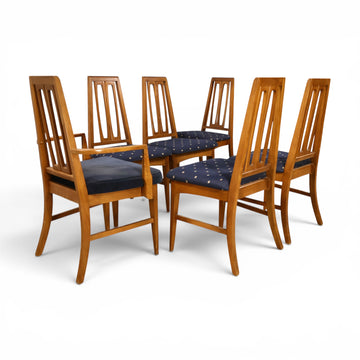
A vintage MCM lounge chair in the corner of a home office serves multiple functions: a reading and thinking spot, a change of position during the workday, and a strong visual anchor. Classic MCM lounge chair forms — low, wide, with walnut frames and upholstered cushions — are among the most available and affordable MCM pieces today.
MCM Storage: Shelving, Sideboards, and Filing
Bookcases and Wall Units
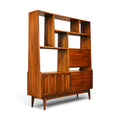
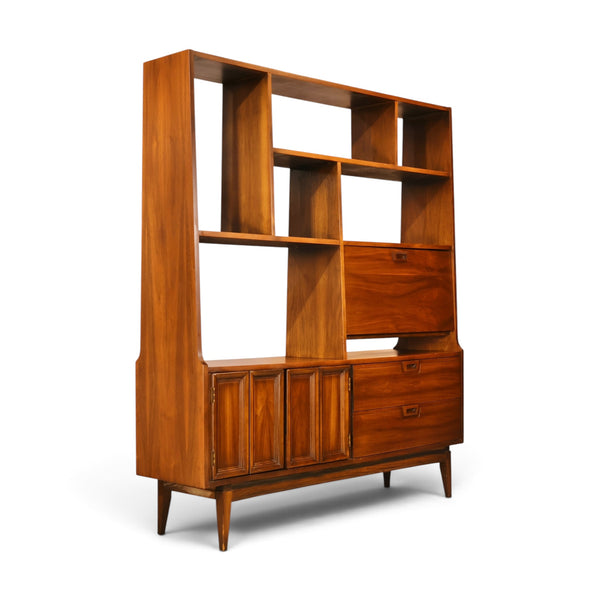
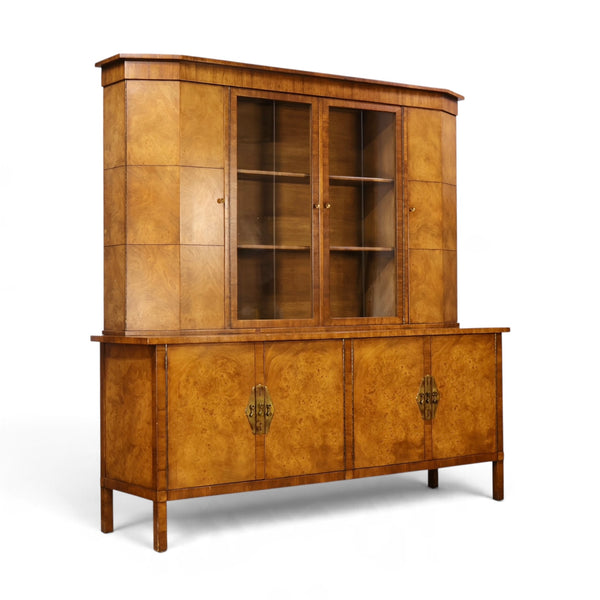
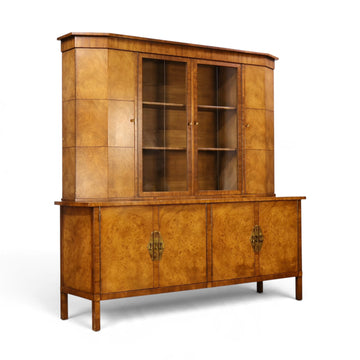
The MCM era produced wonderful modular shelving — teak and walnut units with adjustable shelves, sliding or hinged cabinet doors, and clean horizontal lines. Danish teak wall units, in particular, are exceptional home office pieces: they provide substantial storage with a sophisticated aesthetic that elevates the whole room.
When sourcing MCM bookcases, look for:
- Adjustable shelves (standard peg-and-groove systems on quality pieces)
- Combination of open shelves and closed cabinets (closed storage is important for a clean look)
- Solid back panels rather than wall-mounted open units, which require more precision installation
Sideboards and Credenzas as Office Storage
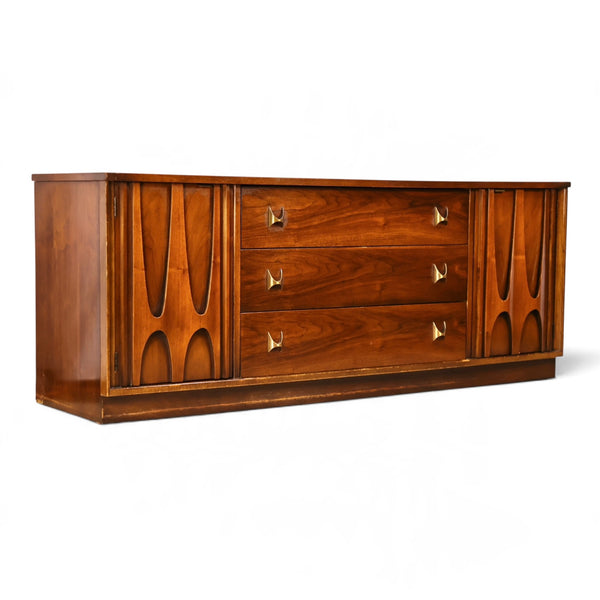
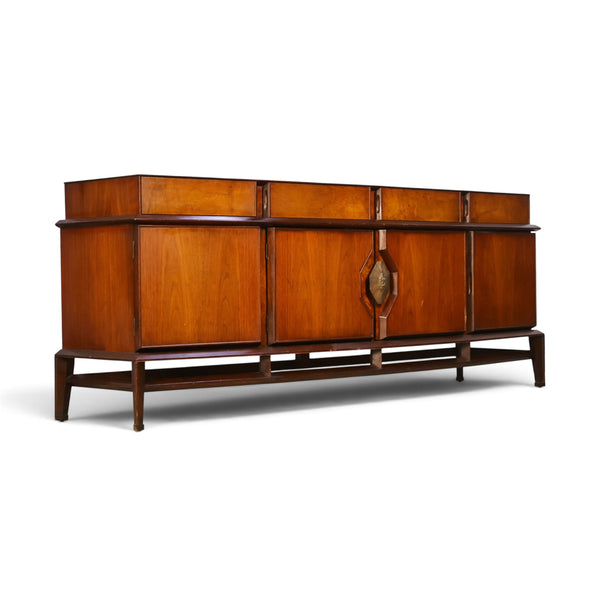
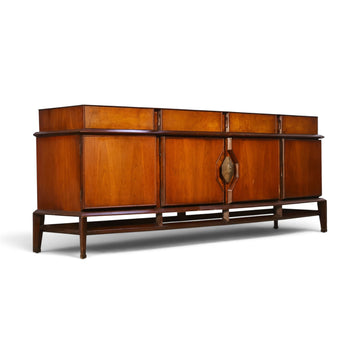
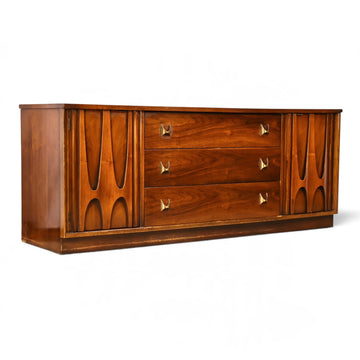
One of the most practical MCM home office choices is a walnut sideboard or credenza positioned along one wall. These pieces typically feature drawers (perfect for supplies, files), cabinet sections (equipment, paper), and a long flat top surface that can hold printers, monitors, or reference materials. The look is sophisticated and much more intentional than a standard office filing cabinet.
Browse our credenzas and sideboards collection for available pieces. See our complete credenza guide for what to look for when buying.
Filing and Small Storage
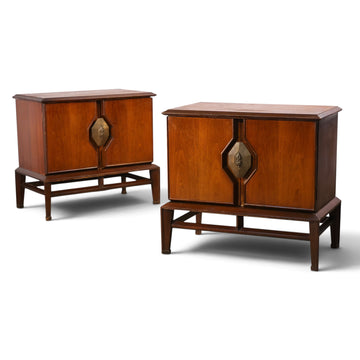
Filing cabinets were produced in MCM styling — lateral file cabinets with walnut veneer facades are uncommon but not impossible to find. More practically, many MCM desk pedestals include deep file drawers. Vintage lateral files with teak or walnut exteriors do appear on Chairish and specialty dealers.
For small office supplies, MCM-era decorative boxes, letter trays, and desk organizers in walnut or rosewood are widely available and add authenticity without requiring major investment.
Lighting the MCM Home Office
Lighting dramatically affects both the function and aesthetic of a home office. MCM lighting is characterized by sculptural forms, warm metals (brass, bronze), and shades in natural materials (fabric, metal, glass).
Task Lighting
The adjustable desk lamp is an MCM staple. Classic forms include:
- Tensor or similar articulated arm lamps in chrome or brass with bullet or dome shades
- Cone-shade adjustable lamps — functional and visually clean
- Tripod-base floor lamps positioned beside the desk
Ambient Lighting
For room-level lighting, walnut-base floor lamps and pendant fixtures with fiberglass or fabric shades are period-correct and widely available. Sputnik-style chandeliers are a bolder choice that makes a clear statement in a home office with sufficient ceiling height.
Layout: Making the MCM Office Work
A few layout principles specific to MCM home offices:
Lead with the desk. Position your desk where it gets the best natural light — ideally with light coming from the side rather than directly behind your monitor. MCM desks are meant to be seen; don't hide them in corners.
Leave breathing room. MCM design values negative space. Don't fill every surface and wall. One or two strong statement pieces work better than a room crammed with vintage finds.
Use rugs to define zones. A vintage area rug — geometric, abstract, or solid — grounds the desk area and adds warmth without adding visual clutter. The furniture floats above a defined zone.
Greenery is period-correct. Large-leaf tropical plants (monstera, fiddle-leaf fig) were staples of the MCM interior and work perfectly in a home office setting. A large plant in a simple ceramic or wood planter adds organic contrast to the clean furniture lines.
Colors and Materials
The MCM home office palette tends toward:
- Warm walnut, teak, and rosewood tones in the furniture
- Wall colors in warm white, off-white, sage, burnt orange, ochre, or deep forest green — colors that complement warm wood tones
- Leather in cognac, tan, black, or olive for seating and desk accessories
- Wool or cotton rugs in geometric patterns
The consistent principle: warm over cool, natural over synthetic, intentional over abundant.
What Not to Do in an MCM Home Office
- Don't mix too many wood tones. Walnut and teak work together because they're similarly warm; mixing light maple with dark walnut creates visual conflict. Choose one dominant wood tone and keep accent pieces close to it.
- Don't let technology dominate. Cable clutter and plastic hardware are antithetical to the MCM aesthetic. Invest in cable management, and choose accessories in materials that blend (leather cord organizers, wooden trays).
- Don't neglect the walls. A great desk in a blank room loses impact. A framed vintage poster, a piece of abstract art, or a simple gallery wall lifts the whole space.
- Don't over-accessorize. MCM is an edit, not an accumulation. Three considered objects on a desk beat a dozen decorative items scattered across the surface.
Building the MCM Home Office Over Time
The best MCM interiors are assembled over time, not purchased all at once. Start with the desk — it's the anchor and the hardest piece to source well. Add seating next, then storage, then lighting and accessories. Patience pays off: a piece found at an estate sale that's exactly right beats a hasty purchase that's merely adequate.
Browse our full inventory for desks, credenzas, chairs, and storage. New pieces are added regularly, and we're happy to advise on specific pieces for your space — reach out any time.
Frequently Asked Questions
What's the best MCM desk for a small home office?
For smaller spaces, a Scandinavian-influenced writing desk or secretary-style desk is ideal. These pieces have clean, minimal profiles that don't overwhelm smaller rooms. A teak writing desk with slender legs can make a small room feel larger rather than more crowded.
How do I manage cables with a vintage MCM desk?
Most vintage MCM desks don't have built-in cable management. Common solutions: adhesive cable clips along the underside edges to route cables to a power strip, a cable management box tucked behind the desk, or a wireless keyboard and mouse to eliminate desk clutter. Some people also drill a discreet grommet hole if they're comfortable with that modification.
Are vintage MCM office chairs comfortable for long workdays?
Vintage MCM swivel chairs are often more comfortable for shorter sessions than modern ergonomic work, as they weren't designed for 8+ hour days. For people working long hours, a modern chair with MCM-influenced design (many brands offer these) may be a better choice for daily use, with vintage MCM pieces used for shorter sessions.
What's a good budget to start an MCM home office?
A solid foundation — quality MCM desk plus storage credenza — typically runs $800–$2,500 depending on condition and brand. Adding seating, lighting, and accessories can bring a well-furnished room together for $2,000–$5,000 total. Patience and willingness to source locally can bring costs down significantly.