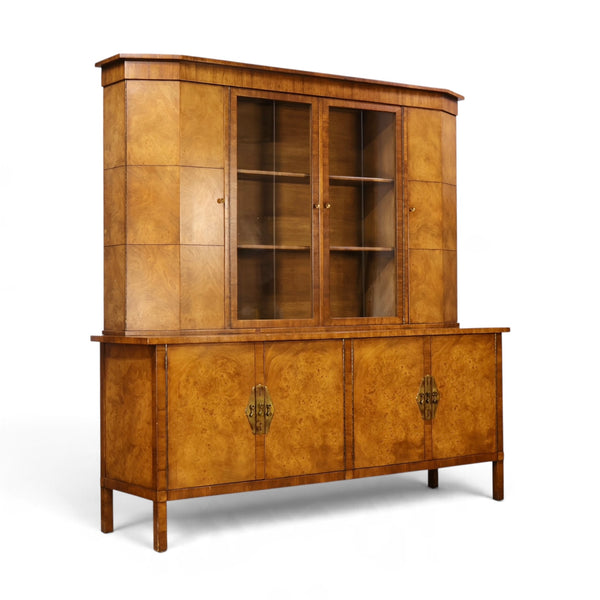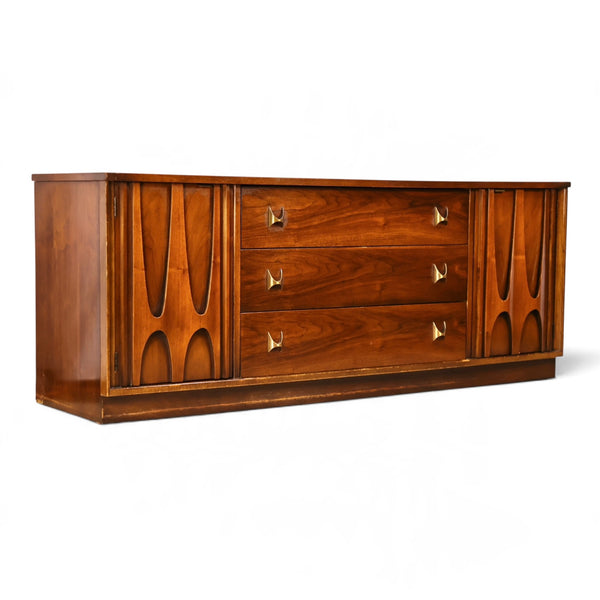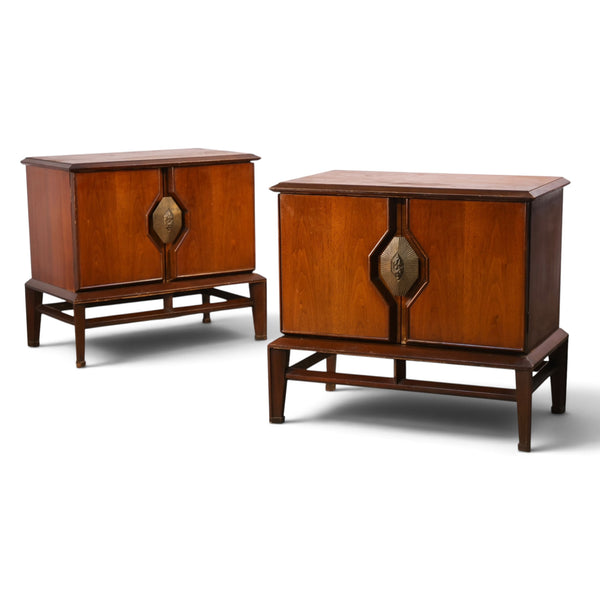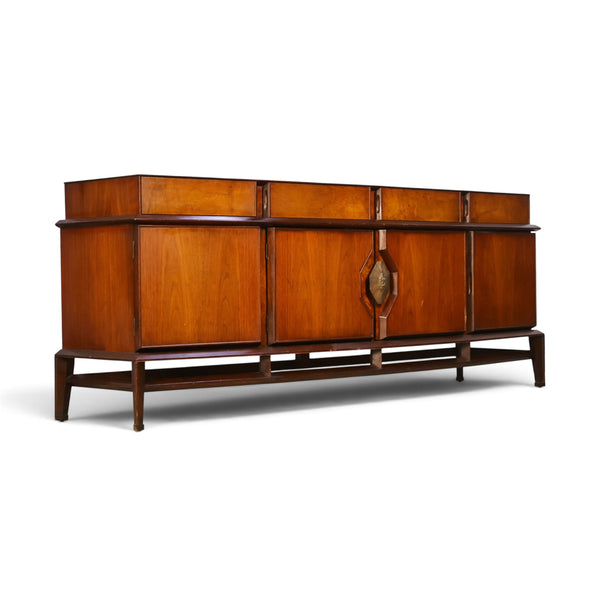

What makes one vintage mid-century modern piece worth three times what an apparently similar piece is worth? The answer isn't arbitrary — it comes down to a consistent set of factors that experienced buyers and sellers understand well. This guide walks through each one so you can evaluate any piece with confidence, whether you're buying, selling, or restoring.
Brand and Designer Recognition
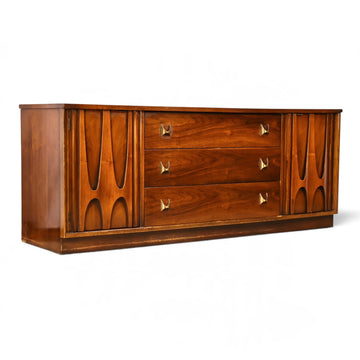
Brand recognition is one of the strongest value drivers in the vintage MCM market. Pieces from well-documented manufacturers — Heywood-Wakefield, Broyhill Brasilia, Herman Miller, Knoll, Lane, Drexel, Dunbar — command premiums because buyers search for them by name. A similarly constructed piece from an undocumented maker sells for less, not because the quality is necessarily lower, but because buyers can't research it and lenders can't appraise it.
Designer attribution adds another layer. A confirmed Hans Wegner chair, a documented Adrian Pearsall sofa, a labeled Vladimir Kagan piece — these carry the designer's reputation as a value multiplier. Confirmation requires a label, stamp, or documented provenance; attribution without evidence is speculation.
Condition: The Primary Variable
Condition is the single most impactful variable in vintage furniture value. The categories that matter most:
- Structural integrity: All joints solid, no wobble, no cracked or repaired frames. A piece with a professionally repaired break is less valuable than an unbroken example; a piece with a poorly repaired or disguised break is significantly less valuable still.
- Surface condition: Original finish in clean condition commands a premium over refinished pieces. Light wear and patina appropriate to age are acceptable and expected; heavy scratching, water rings, or veneer damage are significant deductions.
- Hardware completeness: Original pulls, knobs, and feet in full complement. Missing or replaced hardware reduces value meaningfully, especially on pieces where the hardware is part of the design statement.
- Upholstery: For seating pieces, upholstery condition is largely secondary to frame condition — professional reupholstery on a sound frame is expected and accepted. However, original upholstery in good condition can add premium value for collectors seeking period-correct pieces.
- Harvey Probber Furniture: The Complete Collector's Guide
- How to Style a Mid-Century Modern Living Room
Originality vs. Restoration
The vintage furniture market values originality — but not at all costs. The question is always: what has been changed, and does it help or hurt?
Original finish in good condition is almost always preferable to refinishing. Even a finish with honest wear and patina tells the story of the piece and preserves authentication markers. Stripping and refinishing removes that story and can also damage or obscure maker's labels.
Reupholstery is different. Original upholstery on seating is rarely in usable condition after 60+ years, and quality reupholstery in appropriate fabric doesn't hurt and often helps value. The key word is "appropriate" — period-correct textiles (wool, boucle, leather) are preferable to synthetic fabrics that read as anachronistic.
Hardware replacement is generally negative. Original hardware is often irreplaceable; replacement hardware — even high-quality period-style hardware — signals that something was missing or damaged. If hardware is present and original, preserve it.
Completeness and Sets
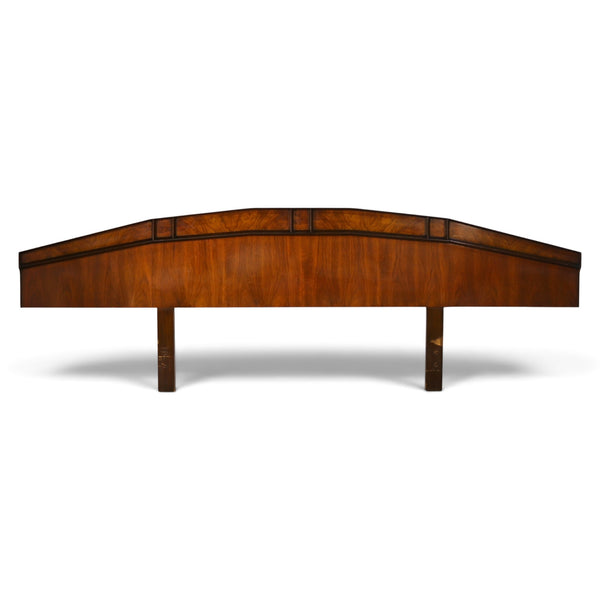
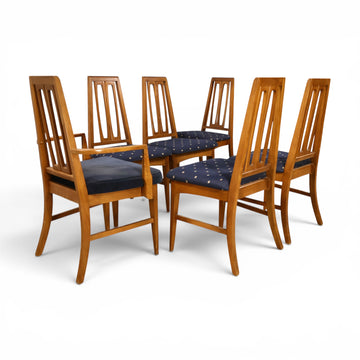
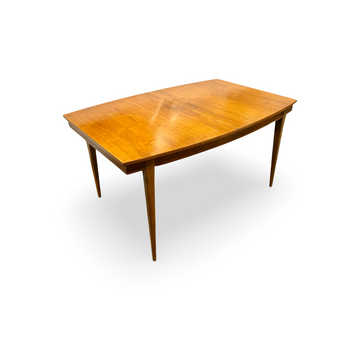
Sets are worth substantially more than the sum of their parts. A complete Planner Group bedroom set — dresser, chest, headboard, nightstands — is worth meaningfully more as a group than as individual pieces. A matching dining table and chair set commands a premium over table and chairs sourced separately. Buyers pay for the work that has already been done to assemble a coherent grouping.
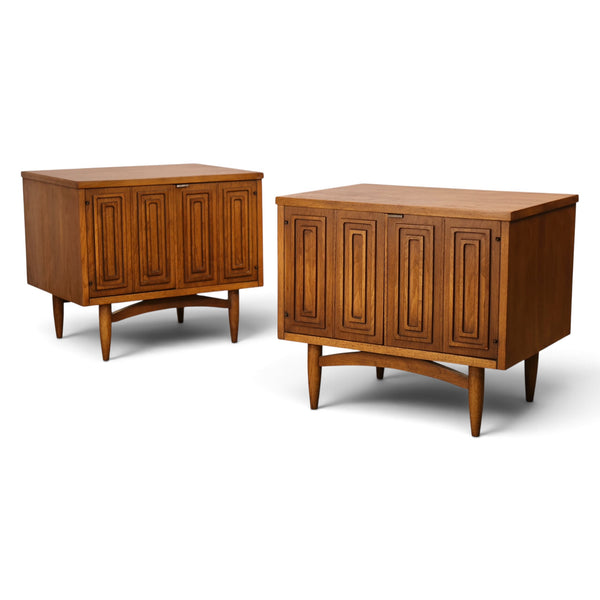
This applies to case goods too: a pair of matching credenzas, a set of four identical dining chairs, a coordinated living room grouping. Whenever you have matching pieces, keep them together.
Selling Channel
Where a piece is sold significantly affects its realized price. Different channels reach different buyers with different price expectations:
- Specialist vintage platforms (like Chairish and 1stDibs) reach buyers who understand the category and expect to pay for quality and curation
- General marketplaces reach a broader but less category-educated audience — higher volume potential but often lower realized prices for premium pieces
- Specialist retailers (shops like ours) add expertise, restoration, and curation value that buyers recognize and pay for
- Estate sales and auctions can go either direction — exceptional finds are possible, but so is paying retail for misidentified or mis-described pieces
Restoration: When It Adds Value
Professional restoration adds value when it addresses genuine problems — structural repairs, surface restoration, quality reupholstery — and is executed to a standard appropriate to the piece. The restoration should be honest: repair what needs repair, preserve what doesn't.
Restoration subtracts value when it's unnecessary (refinishing a sound original finish), inappropriate (modern fabric on a period frame), or disguising (repairs that conceal rather than fix structural problems). A buyer paying a premium for a vintage piece is paying for authenticity; anything that undermines authenticity undermines value.
Rarity and Demand
Supply and demand operates in vintage furniture just as in any market. Pieces from limited production runs, from designers whose work is rarely on the market, or in configurations that are inherently uncommon (large sectionals, complete sets, unusual finishes) command premiums when demand is present. Conversely, common pieces — standard dressers from high-volume manufacturers — are priced by condition and channel rather than rarity.
Demand cycles in vintage furniture are real. Designers and styles come in and out of collector focus. Staying close to the market — following what's selling, where, and at what price — is the most reliable way to calibrate value expectations for specific pieces.
How to Research a Piece's Value
The most reliable way to understand what a piece is worth is to look at what comparable pieces have actually sold for — not what they're listed for, but what they closed at. Sold listings on major vintage platforms, auction records, and dealer sales history are all useful data points. Ask our team if you're considering a significant purchase and want a second opinion on value — we're happy to share what we know about the current market for specific pieces.