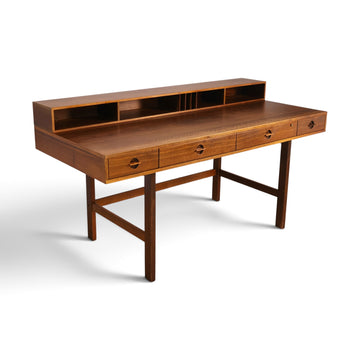
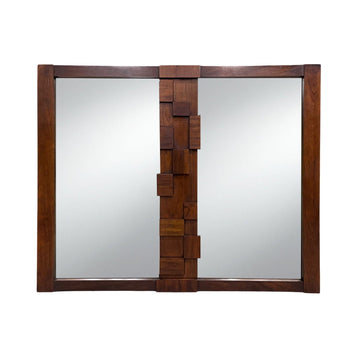


A well-styled mid-century modern living room is one of the most satisfying interiors to put together — the vocabulary is clear, the pieces are available, and when it works, it works decisively. But it takes more than acquiring a few teak pieces and calling it done. This guide walks through every element: the anchor pieces, the supporting cast, the materials, the palette, the lighting, and the details that separate a cohesive MCM room from a collection of disconnected furniture.
Start With the Sofa: The Room's Anchor
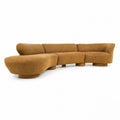
The sofa sets the tone for everything else. In a mid-century modern living room, the sofa should be low-slung — the high-backed, overstuffed sofas that dominate contemporary furniture retail are the opposite of what you're going for. Look for clean-lined forms with exposed walnut or teak legs, tight backs, and defined arms. The cushions should be structured, not pillowy.
Classic forms to look for: the clean three-seat sofa with tapered walnut legs (produced by dozens of quality American manufacturers in the 1950s and 60s), the Adrian Pearsall cloud or compass sofa for a more dramatic statement, or a Danish modern sofa from a maker like France & Søn for a more restrained Scandinavian take. If the sofa has arms that continue the wood frame — as opposed to fully upholstered arms — it will read more definitively MCM.
Shop our vintage mid-century modern sofas to find the right anchor piece.
The Lounge Chair: The Essential Companion
Every mid-century modern living room needs at least one great lounge chair. This is the piece that tends to become the room's most personal element — where people actually sit, read, and spend time. The classics are classics for a reason: the Eames Lounge Chair and Ottoman, the Wegner Round Chair, a Probber or Pearsall lounge chair in walnut.
For more accessible options: any well-made walnut-framed lounge chair with clean proportions, exposed wood, and generous seat depth will serve the purpose. Pairs are better than singles — two matching lounge chairs flanking a sofa create a seating arrangement with genuine architectural weight.
Browse our vintage lounge chairs for single chairs and matching pairs.
The Coffee Table: Low, Clean, and Present
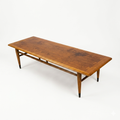
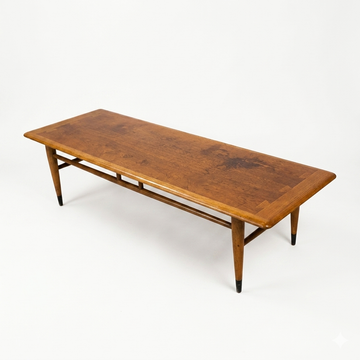
The MCM coffee table is typically lower than modern tables, with clean-lined rectangular, oval, or free-form tops on angled or tapered legs. Walnut, teak, and glass are the dominant materials. A solid wood top reads warmer; a glass top with a walnut or brass base reads more architectural.
One classic approach: a rectangular walnut coffee table centered on the sofa, with a smaller round side table at the lounge chair. Another: a pair of nesting tables — a very MCM solution that gives flexibility without visual clutter. Avoid tables that are too large for the room; the MCM living room is meant to feel open and unencumbered.
See our vintage coffee tables and side tables.
The Credenza: Storage as Sculpture
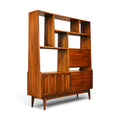
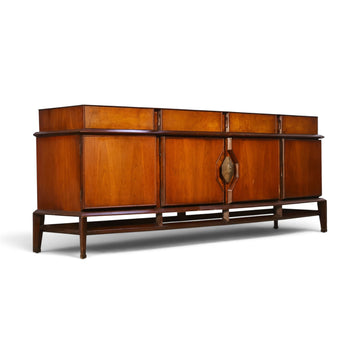
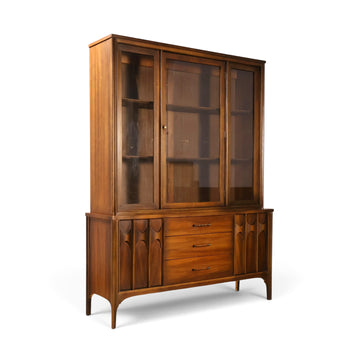
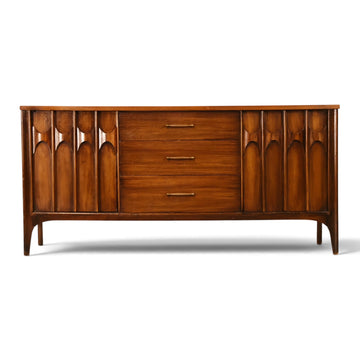
If there's one piece that defines the mid-century modern living room more than any other, it might be the credenza. Long, low, and horizontal — a good credenza does everything: provides storage, anchors a wall, and creates a display surface for lamps, art, and objects. In a room with 9-foot ceilings or higher, consider a taller highboard instead; in rooms with lower ceilings, a standard sideboard height (around 30 inches) works best.
Materials: teak and walnut dominate. Sliding doors, tambour doors, or a combination of doors and drawers. Hairpin legs, tapered legs, or a base-mounted design. The credenza should run at least half the length of the wall it occupies — a too-small credenza looks tentative in a MCM context.
Shop our vintage credenzas and sideboards.
Materials and Palette
The mid-century modern material palette is warm, natural, and restrained. The key materials:
- Wood: Walnut and teak dominate. Walnut reads American MCM; teak reads Danish modern. Both work together. Avoid mixing walnut with cherry or mahogany unless you know what you're doing — the undertones conflict.
- Upholstery: Wool boucle, tweed, mohair, or leather in warm neutrals — camel, cognac, rust, olive, mustard, cream. These are the period-correct textiles and they photograph beautifully. Avoid pattern-heavy fabrics unless you're committed to a 1950s retro look.
- Metal: Brass and chrome, not mixed. Choose one and stay with it across all hardware and light fixtures.
- Rug: A low-pile rug in wool — geometric pattern or solid — grounds the seating area. Avoid high-pile shag in a serious MCM context; it reads more 1970s than 1950s.
Color on the walls: warm whites and off-whites are the safest backdrop for warm wood tones. Deeper colors — a dusty blue-green, a warm terracotta, a charcoal — work well as accent walls behind the sofa or credenza wall. Avoid cool whites and grays, which fight with walnut and teak undertones.
Lighting: The Most Overlooked Element
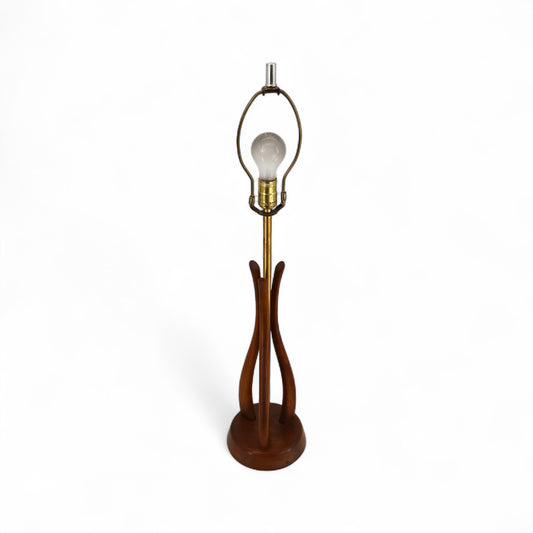
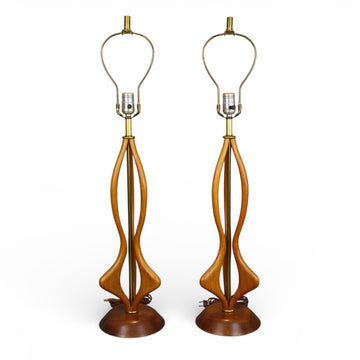
Mid-century modern lighting is sculptural and warm. The vocabulary: tripod floor lamps, arc lamps, ceramic table lamps on walnut bases, sputnik-style pendants. The light source should be warm (2700–3000K) — cool LED light is the fastest way to make a MCM room feel wrong.
Practical approach: one floor lamp beside the lounge chair for reading, one or two table lamps on the credenza, and overhead lighting on a dimmer if possible. Torchiere-style uplights that wash the ceiling add warmth without adding furniture. Avoid recessed can lighting as the sole source — it produces the flat, even light that MCM interiors explicitly reject.
Art and Objects
The MCM living room doesn't over-accessorize. The pieces themselves — especially good furniture — are the visual content. Art should be present but not overwhelming: one or two pieces hung with intention, rather than a gallery wall. Abstract prints, mid-century modern paintings, or sculptural ceramics on the credenza top.
The credenza surface is where MCM rooms come alive in detail: a ceramic lamp, a sculptural object or two, perhaps a small plant in a low ceramic planter. The key is restraint — three objects read as a considered composition; eight objects read as clutter.
Common Mistakes to Avoid
- Mixing wood tones carelessly: Walnut and teak can coexist; walnut and painted white furniture usually can't without intention.
- Scale mismatches: MCM furniture is proportioned for rooms — a small loveseat in a large room, or a massive sectional in a small room, undermines the spatial logic the design vocabulary assumes.
- Wrong leg height: The exposed leg is fundamental to MCM aesthetics. Furniture that sits directly on the floor — no legs visible — fights the vocabulary.
- Too much or too little: MCM interiors breathe. A room that's too sparse feels unfinished; a room that's too full loses the visual clarity that makes MCM work.
- Wrong-era accessories: Contemporary throw pillows in trendy prints, farmhouse-style lighting, or industrial-style elements pull the room in different directions. Stay in the vocabulary.
Putting It Together: A Simple Framework
Start with the largest pieces and work inward. Sofa first — it sets the scale and tone. Then the lounge chair (or chairs). Then the coffee table. Then the credenza. Then lighting. Then rug. Then art and objects. Each step builds on the previous one; decisions made later should reinforce, not contradict, decisions made earlier.
Give the room a moment to breathe before adding more. A well-edited MCM living room with six great pieces is almost always better than a crowded one with twelve adequate pieces.