

Scandinavian vs. American Mid-Century Modern Furniture: Key Differences and What to Buy
When most people think of mid-century modern furniture, they're actually thinking of two distinct but related traditions: Scandinavian (primarily Danish) modernism and American modernism. Both emerged from the same postwar optimism and shared design philosophies — clean lines, natural materials, functional beauty — but they developed in quite different directions. Understanding the differences helps you shop smarter, mix pieces more confidently, and appreciate what you're looking at.
The Shared Foundation: What Scandinavian and American MCM Have in Common
Both traditions share core principles that make mixing them so natural:
- Natural wood as the primary material: Whether Danish teak or American walnut, wood is central to both traditions.
- Tapered legs: The splayed, tapered leg is a universal MCM signature on both sides of the Atlantic.
- Functional design: Both traditions rejected ornament for its own sake. Every design element should have a reason.
- Connection to craft: Both Scandinavian and American MCM valued quality construction — mortise-and-tenon joinery, dovetail drawers, solid wood construction.
- Optimism: Both emerged from postwar prosperity and a belief that good design could improve daily life.
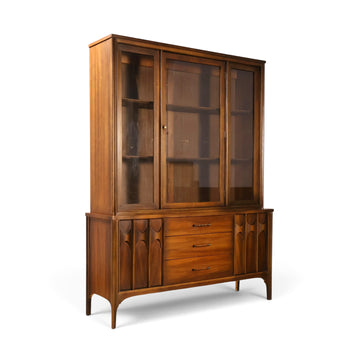
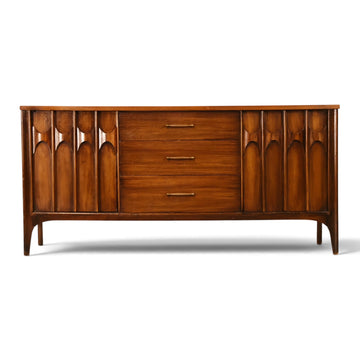
- Broyhill Brasilia Furniture: The Collector's Complete Guide
Scandinavian Mid-Century Modern: The Danish Tradition
Scandinavian MCM — particularly Danish Modern, as it became known in America — is characterized by a few distinctive qualities:
Materials
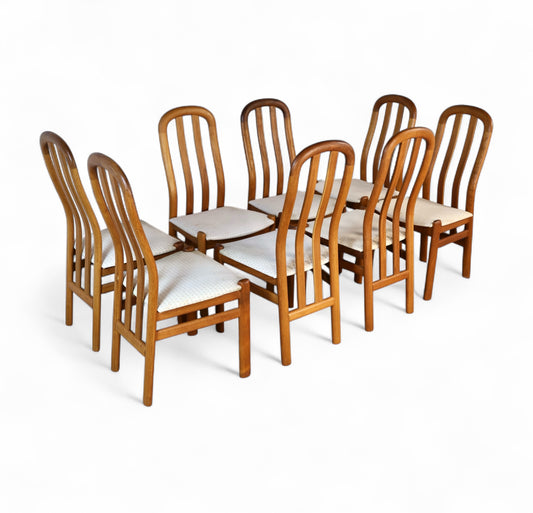
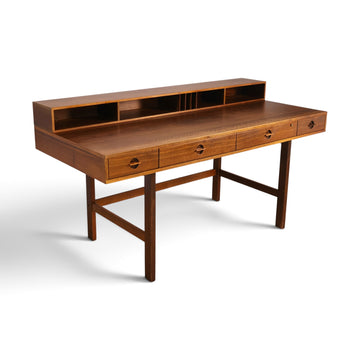
Teak dominates Scandinavian MCM of the 1950s–1970s, imported from Southeast Asia and valued for its durability, oil content, and beautiful grain. Rosewood (particularly Brazilian rosewood) was used in higher-end Danish pieces until trade restrictions in the 1970s made it increasingly scarce. Oak and beech appear in some production pieces.
Aesthetic Character
Danish modern tends toward the organic and sculptural. Chairs often feature bentwood forms, curved backs, and papercord or rush seats. Case goods are horizontal and low-slung with sliding doors, hairpin or tapered legs, and restrained hardware. The human form strongly influenced chair and seating design — Danish chairs are often exceptionally comfortable despite their minimal appearance.
Key Designers
- Hans Wegner: Wishbone chair, Papa Bear chair, Peacock chair, Shell chair — a prolific genius of chair design
- Arne Jacobsen: Egg chair, Swan chair, Ant chair, Series 7 chair — more geometric and industrial than Wegner
- Finn Juhl: Chieftain chair, Pelican chair — deeply sculptural, almost painterly furniture
- Borge Mogensen: Shaker-influenced, functional, understated case goods and seating
- Arne Vodder: Exceptional teak case goods — credenzas, sideboards, bedroom suites
Production Context
Much Danish MCM was produced by small cabinetmaking shops rather than large factories. This craft tradition meant higher quality control and more handwork than American production furniture — but also smaller production runs and more variation between pieces.
American Mid-Century Modern: The Modernist Mainstream
American MCM operated at a much larger scale than its Scandinavian counterpart — from the mass-production giants to the avant-garde studios of Knoll and Herman Miller.
Materials
American MCM designers overwhelmingly favored walnut — its rich chocolate-brown grain, workability, and availability in the postwar American lumber market made it the definitive MCM wood. Birch and maple appear in production pieces (especially Heywood-Wakefield). Fiberglass, aluminum, and molded plywood were pioneered by American designers (Eames, Nelson, Saarinen) and have no Scandinavian counterpart at the time.
Aesthetic Character
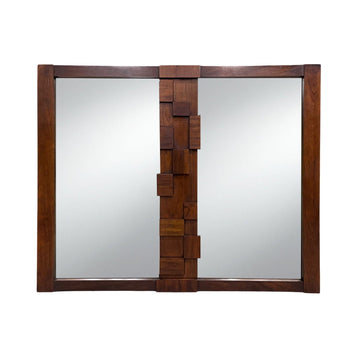
American MCM ranges from the organic modernism of Charles and Ray Eames to the elegant restraint of Florence Knoll to the dramatic expressionism of Adrian Pearsall. American production furniture (Lane, Drexel, Bassett, Broyhill) typically features strong grain figure on walnut drawer fronts, geometric hardware, and a more architectural aesthetic than its Danish counterpart.
Key Designers and Manufacturers
- Charles and Ray Eames (Herman Miller): Lounge chair, shell chairs, molded plywood furniture — arguably the most influential MCM designers
- George Nelson (Herman Miller): Thin Edge case goods, Bubble lamps, Platform bench, Ball clock
- Eero Saarinen (Knoll): Tulip table, Womb chair — organic pedestal forms that prefigured space-age design
- Florence Knoll (Knoll): Rigorous, architectural credenzas, sofas, and executive furniture
- Adrian Pearsall (Craft Associates): Dramatic lounge chairs with sculptural walnut bases
- Lane Furniture: Production walnut credenzas, bedroom sets, and accent tables in the Acclaim and other lines
- Drexel Heritage: High-quality production bedroom and dining furniture in walnut
- Heywood-Wakefield: Solid maple/birch in the distinctive blonde Wheat finish
Key Differences at a Glance
- Wood: Teak and rosewood (Scandinavian) vs. walnut and maple (American)
- Scale of production: Small cabinetmaking shops (Scandinavian) vs. large factories (American production) alongside studio makers (Knoll, Herman Miller)
- Organic vs. architectural: Danish pieces tend toward organic curves; American pieces range from organic (Eames) to rigidly geometric (Knoll)
- Seating comfort: Danish chairs are often renowned for ergonomic comfort; American production seating varies widely
- Price range today: Designer-attributed Scandinavian and American pieces command similar premiums; unattributed Danish teak is often more accessible than comparable unattributed American walnut production furniture
How to Mix Scandinavian and American MCM
The good news: they mix beautifully. Some guidelines:
- Teak and walnut can coexist — the warm golden tone of teak and the deeper brown of walnut complement each other when the forms are harmonious.
- Avoid mixing too many wood species — two is ideal; three requires careful curation.
- Shared formal elements — tapered legs, clean lines, restrained hardware — unify pieces from different traditions.
- A Danish teak credenza with American walnut dining chairs works beautifully. A Danish teak coffee table with an Eames lounge chair is a classic combination.
What to Buy: Practical Guidance
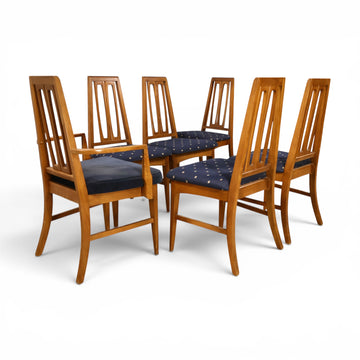
- For seating: Danish chairs (Wegner, Jacobsen) have a slight ergonomic edge and tremendous character. American production chairs (Lane, Drexel) are more accessible and often very well-made.
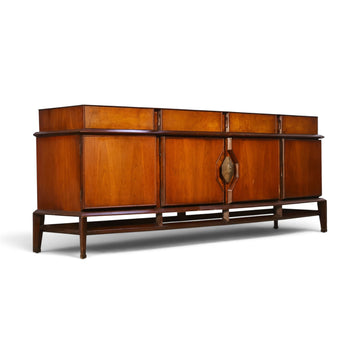
- For case goods: Danish teak credenzas and sideboards offer great value in today's market. American walnut pieces from Lane and Drexel are often underpriced relative to their quality.
- For statement pieces: Herman Miller (Eames, Nelson) and Knoll (Saarinen, Florence Knoll) command significant premiums but offer the most recognizable design pedigree in American MCM.
Shop Both Traditions at Mod City Mad
We source from both Scandinavian and American traditions — Danish teak credenzas and bedroom furniture, American walnut case goods, Lane, Drexel, Broyhill, and more.
- Vintage Walnut Credenzas
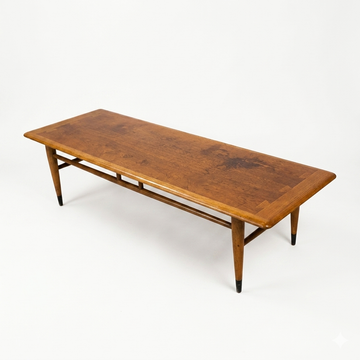
- Vintage Teak Coffee Tables
- MCM Credenza Guide
- Vintage Teak Furniture Guide
- How to Authenticate Vintage MCM Furniture
Further Reading
- How to Buy Vintage Furniture Online: A Complete Guide
- How to Ship Vintage Furniture: What Every Buyer Needs to Know
- Arne Jacobsen Furniture Collector's Guide — Egg Chair, Swan Chair, Series 7, and the Dane whose architectural furniture defined the look of the 1950s and 60s.
Further Reading
- Jens Risom Furniture Collector's Guide — One of Scandinavia's most influential exports to American interiors, Risom's work bridges Danish design and U.S. mid-century taste perfectly.
- T.H. Robsjohn-Gibbings Furniture Collector's Guide — The British-American designer who brought classical restraint and modernist elegance to postwar American homes.
- Danish Modern Furniture Buyer's Guide: Designers, Styles & What to Buy
- Finn Juhl Furniture Collector's Guide
- Børge Mogensen Furniture Collector's Guide
Further Reading: Explore our Kai Kristiansen Furniture Collector's Guide for an in-depth look at one of Denmark's most refined mid-century modern designers.