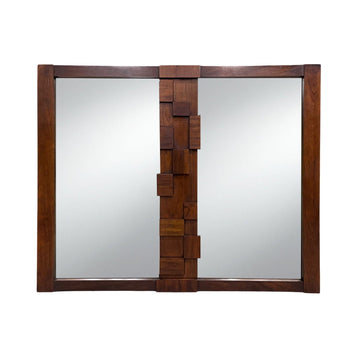

Milo Baughman is one of the most significant and prolific designers in the history of American mid-century modern furniture. Working primarily with Thayer Coggin of High Point, North Carolina, Baughman produced a remarkable body of work spanning more than four decades — from the early 1950s through the 1990s — that consistently pushed the boundaries of American furniture design. His pieces are prized today for their bold geometric forms, exceptional quality, and enduring modernist aesthetic.
Who Was Milo Baughman?
Born in 1923, Milo Baughman studied at the Art Center College of Design in Los Angeles before establishing himself as a furniture designer. His early work drew heavily on the influence of Scandinavian modernism and the California modern movement, but he quickly developed a visual language that was distinctly and unapologetically American. His long-running collaboration with Thayer Coggin, which began in 1953, gave him the manufacturing infrastructure to realize his most ambitious visions. The result was a catalog of furniture that ranged from elegantly spare lounge chairs to dramatic chrome-and-velvet sofas that defined upscale American interiors of the 1960s and 1970s.
Signature Design Elements
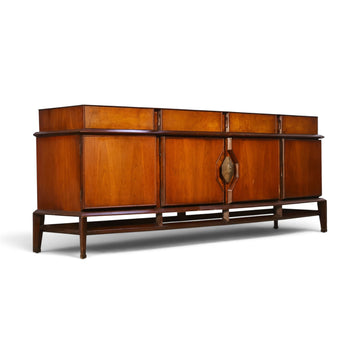
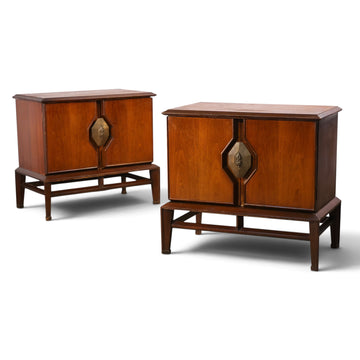
Baughman's furniture is recognizable by several signature characteristics that evolved through his career. Early pieces from the 1950s and early 1960s tend to feature the warm walnut frames and clean horizontal lines characteristic of American MCM at its finest. Lounge chairs from this period sit on low, splayed walnut legs with tight, architectural upholstery — pieces that feel at once casual and sophisticated.
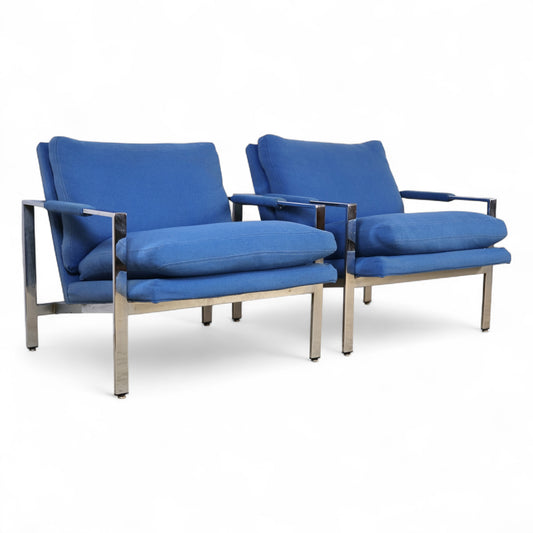
By the late 1960s and into the 1970s, Baughman embraced chrome and mixed materials with particular enthusiasm. His chrome-framed pieces — sofas, dining chairs, and occasional tables with gleaming tubular steel frames — became defining objects of the era. The combination of polished chrome with plush upholstery in velvet, boucle, or leather gave these pieces a glamorous quality that set them apart from the more austere Scandinavian modernism popular at the time. Later pieces from the 1980s moved toward even bolder geometric forms with lacquered finishes.
Identifying Milo Baughman Furniture
Authentic Milo Baughman pieces are typically marked with a Thayer Coggin label, usually a metal tag or paper label affixed to the underside of pieces, the back of frames, or under seat cushions. Look for the words "Thayer Coggin" along with "Design: Milo Baughman" or similar attribution. Later pieces may carry the "Milo Baughman for Thayer Coggin" branding more prominently.
Beyond labels, look for the distinctive construction quality that sets genuine Baughman pieces apart: solid hardwood frames (walnut or later chrome-finished steel), corner blocking, high-quality spring construction in seating, and precision in details like arm angles and leg joinery. Baughman was exacting about production quality, and pieces made to his specifications hold up exceptionally well after 50-plus years of use.
Most Collectible Milo Baughman Pieces
The most sought-after Milo Baughman pieces tend to be his iconic lounge chairs from the 1960s — low-slung, walnut-framed designs with barrel-shaped or square backs that epitomize American MCM seating. His chrome-frame furniture from the early 1970s is also highly collectible, particularly sofas and sectionals with the gleaming tubular steel frames and original upholstery. Dining chairs with chrome bases have seen particularly strong collector interest in recent years.
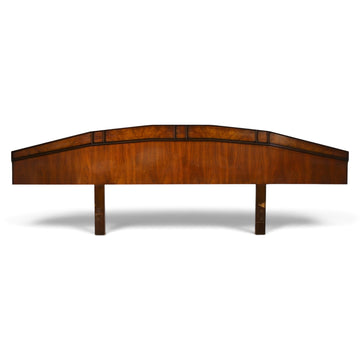
Rare pieces include his platform sofas — long, low, modular seating systems that were revolutionary in their time and remain striking in contemporary interiors. Bedroom furniture by Baughman is less commonly seen but equally desirable: low-profile platform beds and case pieces with the same clean-lined confidence as his seating.
What to Look for When Buying
When shopping for Milo Baughman furniture, pay close attention to frame integrity — walnut frames should show no cracking at joints, and chrome frames should be free of pitting or heavy corrosion. Original upholstery is less critical than structural integrity, as quality reupholstery can restore pieces to excellent condition without diminishing their value. In fact, many collectors prefer to find pieces with original foam in good condition and simply recover them in period-appropriate fabric.
Thayer Coggin continued producing Baughman's designs throughout the designer's life and beyond, so dating pieces requires attention to construction details and hardware. Earlier pieces (1960s–early 1970s) typically command premium prices, though later production quality remained high throughout the Thayer Coggin relationship.
Milo Baughman in Your Home Today
The enduring appeal of Milo Baughman furniture lies in its adaptability. Unlike some period furniture that reads as a costume, Baughman's pieces integrate naturally into contemporary interiors. A walnut-frame lounge chair from 1965 looks equally at home in a minimalist modern apartment as in a traditionally decorated living room. The chrome-frame pieces from the 1970s pair beautifully with contemporary design, providing a warm retro accent without overwhelming a room.
Browse our current selection of Milo Baughman furniture and Thayer Coggin pieces — we carefully curate our inventory for quality and authenticity, offering pieces in both as-is and professionally restored condition. Whether you are a first-time buyer or a seasoned collector, our team can help you find the right piece for your space.