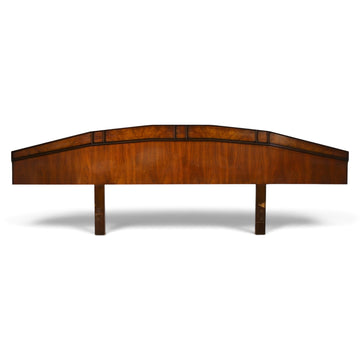
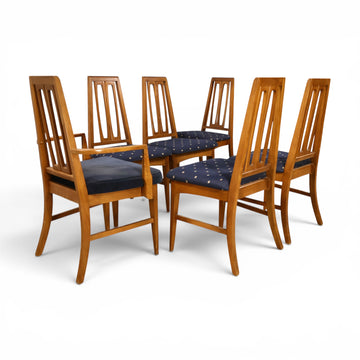
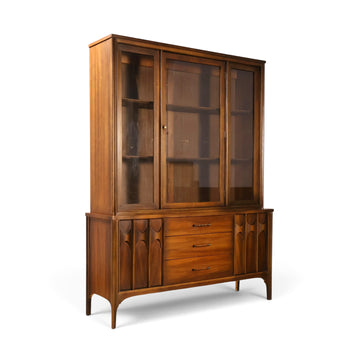
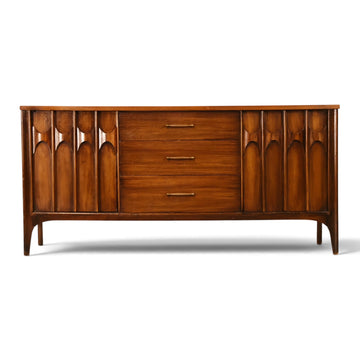
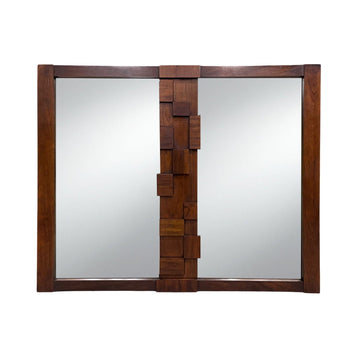

Thayer Coggin is one of the most significant names in American mid-century modern furniture, known primarily as the manufacturer that gave Milo Baughman the platform to realize his most ambitious designs. Founded in High Point, North Carolina in 1953 by Thayer Coggin himself, the company became a byword for quality American upholstered furniture, producing Baughman's designs with a consistency and craftsmanship that earned the brand a devoted following among architects, interior designers, and collectors.
The Thayer Coggin Story
Thayer Coggin met Milo Baughman in 1953, and their partnership — which lasted until Baughman's death in 2003 — became one of the most productive designer-manufacturer relationships in American furniture history. Coggin provided the manufacturing expertise, quality materials, and business infrastructure; Baughman provided a seemingly inexhaustible stream of innovative designs. The result was a catalog that ranged from spare, architectural walnut-frame lounge chairs in the late 1950s to the glamorous chrome-and-velvet sofas of the 1970s.
What distinguished Thayer Coggin from other American furniture manufacturers was a commitment to production quality that matched the ambition of Baughman's designs. Eight-way hand-tied spring construction was standard in seating pieces. Frame joints were corner-blocked. Upholstery was executed with the precision of custom work. These were not budget pieces: Thayer Coggin furniture was sold through better department stores and interior design showrooms, positioned squarely at the upper end of the American furniture market.
Identifying Thayer Coggin Furniture
Authentic Thayer Coggin pieces carry the manufacturer's label — typically a fabric woven label sewn to the underside of seat cushions, the back of sofas, or the dust cover on the bottom of chairs. Look for "Thayer Coggin" along with "Design: Milo Baughman" or "A Milo Baughman Design." Later pieces may carry the "Milo Baughman for Thayer Coggin" designation more prominently on a metal or plastic tag.
Beyond labels, Thayer Coggin pieces are identifiable by their construction quality: solid hardwood frames (walnut in earlier pieces, sometimes chrome-finished steel in later ones), spring construction that feels resilient even after decades of use, and upholstery that remains neatly tailored around arms and backs. The precision of Baughman's designs — the careful proportions, the exact relationship between seat height and arm height — is itself an identifying characteristic.
The Most Collectible Thayer Coggin Pieces
Among the most sought-after Thayer Coggin pieces are the walnut-frame lounge chairs and sofas from the 1960s — low, horizontal designs with clean geometric forms that represent American MCM at its best. Barrel chairs with walnut frames and tight upholstery are consistently popular with collectors and interior designers alike.
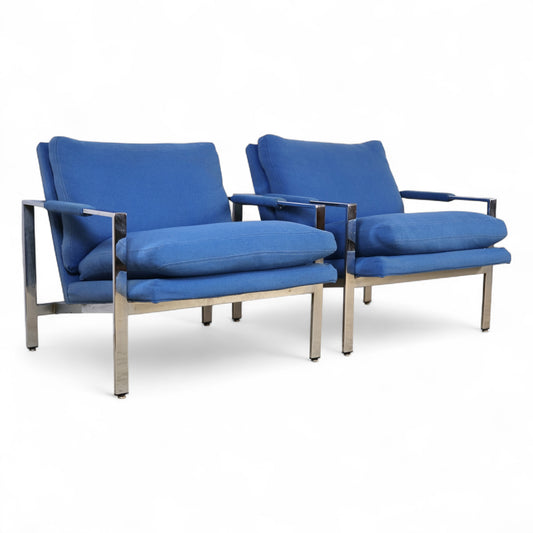
From the 1970s, the chrome-frame series — sofas, sectionals, and lounge chairs with gleaming tubular steel bases and plush velvet or boucle upholstery — have become increasingly collectible as interest in the broader 1970s American design moment has grown. These pieces have a glamorous, confident quality that distinguishes them from the more austere Scandinavian modernism that dominated the same era.
Platform sofas and sectionals from the late 1960s and early 1970s are among the most architecturally ambitious pieces: long, low, modular seating systems that fill a room with confident horizontal energy.
Buying and Caring for Thayer Coggin Furniture
When evaluating a Thayer Coggin piece, start with the frame. Sit in it, shift your weight, press on the arms — a sound Thayer Coggin frame will feel rock-solid even after 50-plus years. Check chrome pieces for pitting or corrosion; walnut frames for cracks at joints. Structural integrity is far more important than upholstery condition, which can always be replaced.
For caring for walnut frames, clean annually with a gentle furniture cleaner and treat with quality furniture oil. For chrome pieces, clean with a chrome cleaner and treat with a light oil to prevent future oxidation. Upholstery should be vacuumed weekly and professionally cleaned every few years.
Browse our Thayer Coggin collection and our broader Milo Baughman collection for currently available pieces. Each item has been inspected for structural integrity and overall quality.