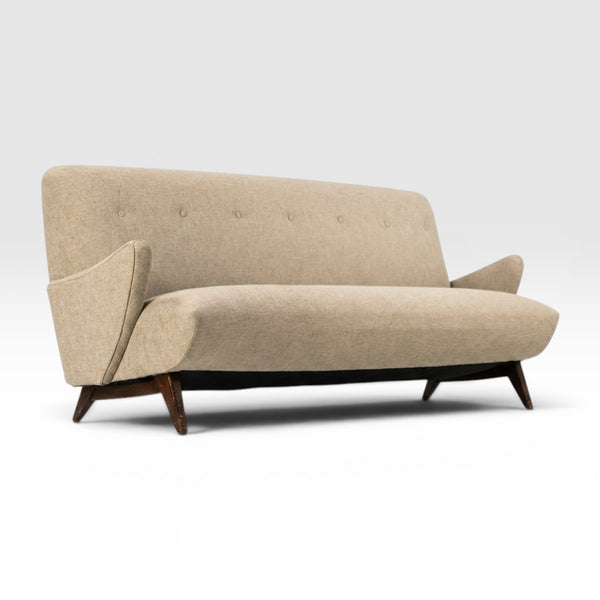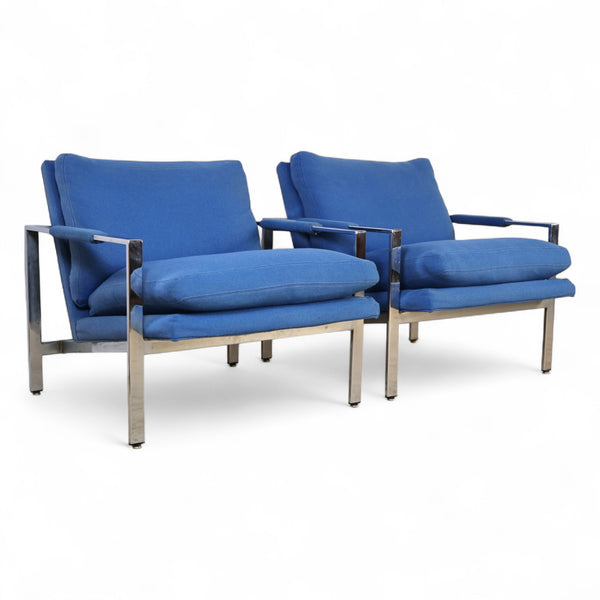

The mid-century modern sofa is one of the great achievements of 20th-century design — a furniture form that American and European designers transformed from a conventional domestic object into an expression of architectural thinking, craft ambition, and a new vision for how people might live. Finding the right vintage MCM sofa or sectional today rewards patience and knowledge. This guide covers the essential designers, styles, and practical considerations for buying a vintage mid-century modern sofa.
The Golden Age of the American Sofa
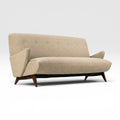
The decade from roughly 1955 to 1965 produced some of the finest sofas ever made. American designers working for quality manufacturers — Dunbar, Thayer Coggin, Craft Associates, Harvey Probber Inc. — competed to create seating that was simultaneously sculptural and supremely livable. The results were sofas with walnut or teak frames lowered close to the floor, with cushions upholstered in wool, leather, or boucle fabrics in the muted earth tones and jewel colors of the era.
These were not sofas designed for a living room anchored by a television. They were centerpieces — objects that organized a room's social life and demonstrated the owner's aesthetic sophistication. The best examples were designed with the same rigor an architect would bring to a building: careful proportions, resolved details, clarity of form.
Essential Designers
Vladimir Kagan
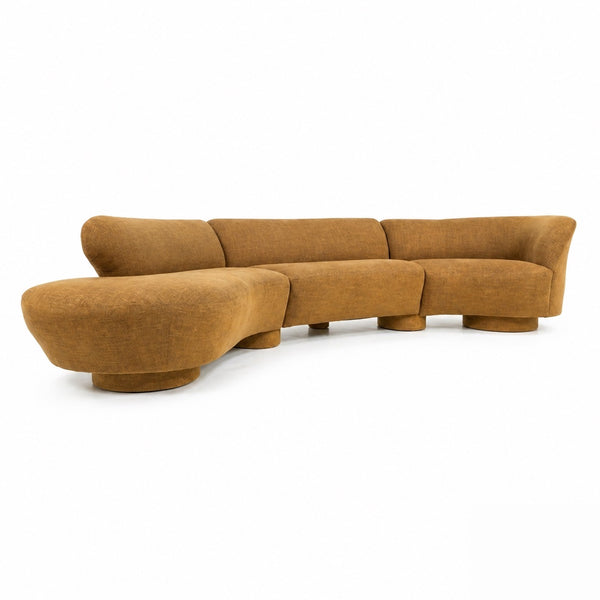
Vladimir Kagan designed some of the most extraordinary sofas in the history of furniture. His Omnibus sectional, Contour sofa, and various freeform designs feature the organic, sculptural silhouettes that set his work apart from the more geometric mainstream. Kagan sofas are extremely rare and command significant prices — they are among the most prized objects in the vintage MCM market. See our Vladimir Kagan collection.
Harvey Probber
Harvey Probber invented the modular sectional sofa as we know it today. His Units system, introduced in the early 1950s, allowed buyers to configure seating arrangements to suit their specific spaces — a revolutionary concept that anticipated the contemporary furniture industry by decades. Probber sofas are characterized by their low, horizontal orientation, tight architectural upholstery, and impeccable walnut frames. See our Harvey Probber collection.
Milo Baughman
Milo Baughman for Thayer Coggin produced an extraordinary range of sofas over four decades. His walnut-frame platform sofas from the 1960s are among the most livable and versatile vintage sofas available today, while his chrome-and-velvet designs from the 1970s offer a more glamorous aesthetic. The variety of Baughman's sofa production means there is almost certainly a Baughman design that suits any interior. See our Milo Baughman collection.
Edward Wormley for Dunbar
Edward Wormley's sofas for Dunbar Furniture represent the refined, sophisticated end of American MCM seating design. Well-scaled, impeccably upholstered, and built to last generations, Wormley sofas have a timeless quality that suits both period and contemporary interiors. See our Edward Wormley / Dunbar collection.
MCM Sectionals: The Original Modular Sofa
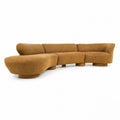
The sectional sofa was a mid-century innovation, pioneered by Harvey Probber and enthusiastically adopted by designers who saw its potential for flexible, architecturally responsive seating arrangements. Vintage MCM sectionals typically consist of several upholstered units — corner pieces, armless centers, and ottomans — that connect via brackets or simply butt up against each other. The walnut or teak base legs give each component a light, floating appearance even in large configurations.
When buying a vintage MCM sectional, try to find complete sets with all original components. Individual pieces from the same line can sometimes be found and assembled into a complete set, but matching upholstery and structural components is much easier when all pieces come together from a single original source.
What to Look for When Buying
Frame integrity is the first and most important thing to assess. Sit on the sofa, shift your weight from side to side, and press down on each arm. A sound frame will feel solid with no wobble, creak, or flex. Pay particular attention to leg-to-frame joints and the connections between frame sections in sectionals.
Cushion condition varies widely. Foam from the 1960s and 1970s typically needs replacement after 60 years — this is normal and expected. The key questions are whether the cushion covers are in good enough condition to reuse, and whether the frame's spring construction is intact. Eight-way hand-tied springs (standard in quality American furniture of the era) indicate a sofa worth restoring.
Original upholstery is a bonus but rarely a requirement. Most vintage sofa buyers plan to reupholster to their own taste, and quality reupholstery using period-appropriate fabrics — bouclé, velvet, quality wool, or leather — can elevate a good-bones sofa into a showpiece.
Caring for Your Vintage MCM Sofa
For wood frames, clean annually with a gentle furniture cleaner and nourish the wood with a quality oil or wax. Check leg-to-frame connections once a year and tighten or re-glue as needed — this simple maintenance prevents small issues from becoming structural problems.
For upholstery, vacuum weekly using an upholstery attachment. Spot-clean with a fabric-appropriate cleaner immediately after spills. Rotate reversible cushions regularly to ensure even wear. Professional cleaning every two to three years will keep upholstery looking its best.
Shop Vintage MCM Sofas
Browse our curated selection of vintage mid-century modern sofas and seating. We carefully select pieces for frame integrity and overall quality, offering options in both as-is and professionally restored condition. Our team is happy to advise on reupholstery options and can recommend trusted craftspeople for restoration work.
Further Reading
- Vladimir Kagan Furniture Collector's Guide
- Harvey Probber Furniture Collector's Guide
- Milo Baughman Furniture Collector's Guide
- Edward Wormley / Dunbar Collector's Guide
- Vintage MCM Lounge Chairs Buyer's Guide
- MCM Furniture Restoration Guide
- Florence Knoll Furniture Collector's Guide — The designer who transformed Knoll Associates and defined corporate modernism with her iconic sofas, tables, and case pieces.
- Warren Platner Furniture Collector's Guide — Platner's Wire Collection included a sofa that remains one of the most distinctive MCM seating pieces.