
Will it fit your wall?
Type your wall width in inches. Every piece shows how it fits, and we remember it as you shop.
No products found
Use fewer filters or remove all
Teak Dining Tables
Vintage teak dining tables represent one of the defining achievements of mid-century Scandinavian furniture design. From the 1950s through the early 1970s, Danish, Swedish, and Norwegian manufacturers produced dining tables in solid teak that combined genuine functional intelligence — extension leaves, pedestal bases, tapered legs — with the warm, richly grained aesthetic that made teak synonymous with quality and modernism. These tables were imported to the United States in large numbers and found in better department stores alongside complementary Danish modern seating and case goods.
Teak's natural oil content makes it one of the most durable hardwoods for dining use. It resists moisture, heat, and staining better than walnut or oak, and the wood's close, straight grain takes a beautiful satin finish that deepens in color with age and use. A well-maintained vintage teak dining table is genuinely harder and more durable than the comparable new furniture at any price point.
Types of Vintage Teak Dining Tables
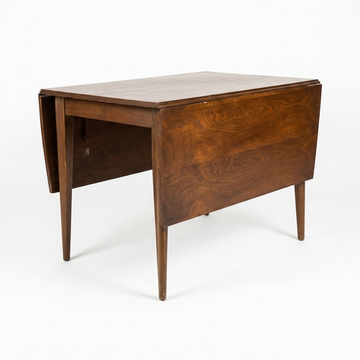
Extension tables are the most practical — most Danish modern teak dining tables feature one or two self-storing leaves that expand seating from four to eight or more. The extension mechanism (butterfly, drop-in leaf, or accordion) is usually smooth and elegantly engineered. Pedestal base tables eliminate corner legs, providing more flexible seating arrangements and a visually lighter profile. Tapered-leg tables are the classic silhouette — four angled legs, clean apron, solid teak top. Round and oval tables were popular in Scandinavian production and work especially well in square rooms or open-plan spaces.
What to Look for When Buying a Vintage Teak Dining Table
- Top condition — The dining surface takes the most wear. Look for deep scratches, watermarks, or areas where the finish has been stripped or heavily refinished. Light surface scratches are normal and can be addressed with teak oil; deep gouges are harder to fix invisibly.
- Extension mechanism — Test that leaves deploy and retract smoothly. Self-storing leaves should lock securely in both extended and retracted positions. Stiff mechanisms are usually just in need of cleaning and waxing the slide rails.
- Leg and base stability — Teak is stable but joints can loosen with age. Check that legs are tight and the base doesn't rock. Loose joints on solid teak tables are typically straightforward to re-glue.
- Leaf matching — On extension tables, confirm leaves are original to the table. Replacement leaves often show a color or grain mismatch that becomes more apparent after refinishing.
- Maker's mark — Look for a paper label, burned mark, or stamp on the underside. Danish makers like Gudme Mobelfabrik, AM Mobler, Vejle Stole, and others are identifiable through their marks. Marked pieces command higher prices and easier resale.
Caring for Your Vintage Teak Dining Table
Teak furniture benefits from periodic treatment with pure teak oil or Danish oil to restore its warm luster and protect the surface. Avoid silicone-based furniture polishes, which can build up and cloud the finish. Use coasters and trivets — teak resists heat better than most hardwoods, but sustained direct contact with hot cookware will still leave marks. See our full guide on caring for vintage wood furniture for more detail.
Pair With
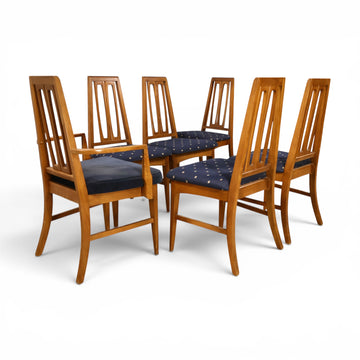
Teak dining tables pair beautifully with Danish modern dining chairs — see our vintage dining chair collection for teak-framed and complementary upholstered options. For a complete Scandinavian modern dining room, browse our full vintage dining table collection and our Danish modern furniture selection. Our Vintage Teak Furniture Buyer's Guide covers identification, care, and market value in depth.