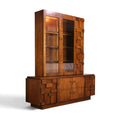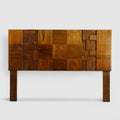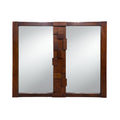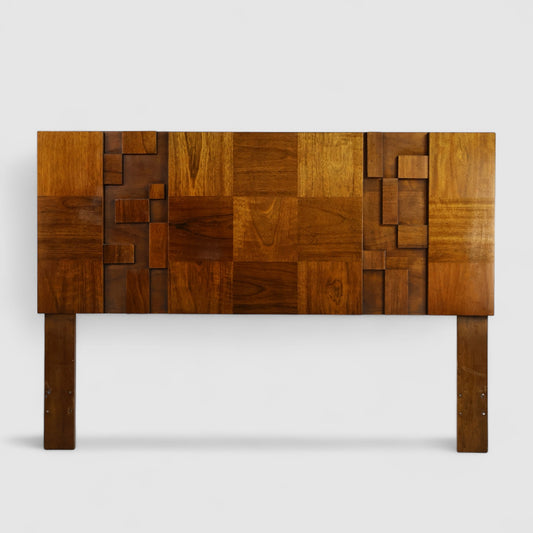
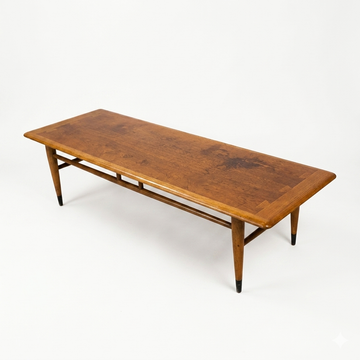
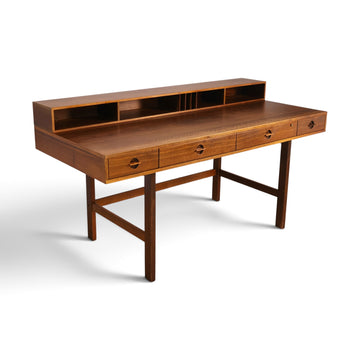
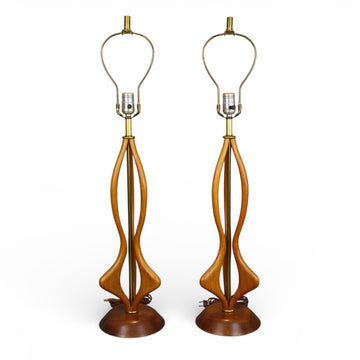
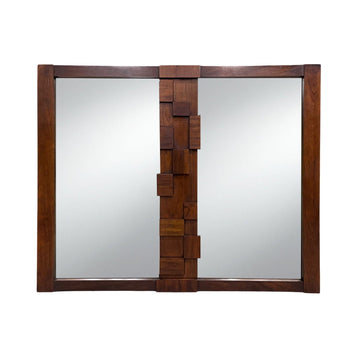


If you've spent any time hunting for mid-century modern furniture, you've almost certainly come across Lane Staccato. With its bold, blocky oak construction and graphic mosaic hardware, the Staccato line stands apart from everything else produced in the 1970s. Today it's one of the most collected brutalist mid-century modern furniture lines on the market.
What Is Lane Staccato?
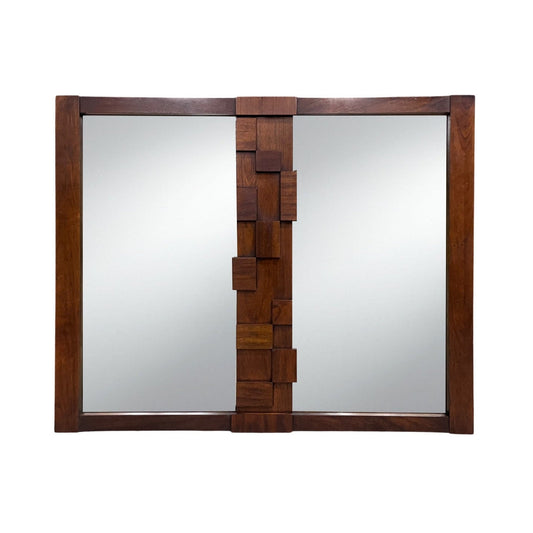
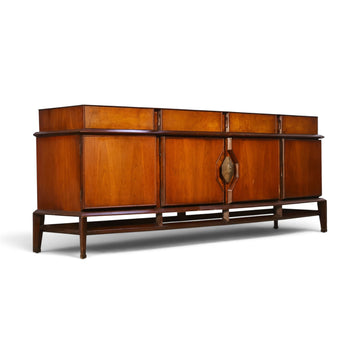
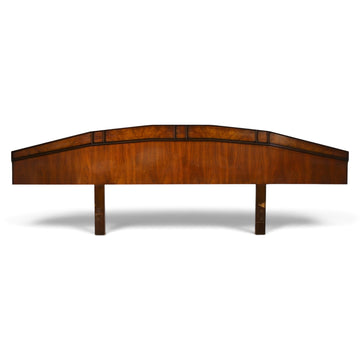
Lane Staccato is a bedroom and dining furniture collection produced by Lane Furniture Company of Altavista, Virginia, primarily in the late 1960s through the 1970s. The line is distinguished by its chunky, architectural solid oak construction, bold geometric hardware, and mosaic wood panel detailing on drawer fronts and headboards.
Lane Furniture was one of America's most prolific mid-century modern manufacturers. But Staccato became the brand's most enduring brutalist statement — a collection that feels as at home in a design-forward loft today as it did in a 1972 bedroom.
Why Is Lane Staccato So Popular?
Staccato's rise in the collector market is directly tied to renewed interest in brutalist furniture design — the aesthetic movement that prized raw materials, heavy forms, and geometric boldness. The line draws frequent comparisons to the work of sculptor Paul Evans, whose handcrafted brutalist furniture now sells for tens of thousands of dollars. Lane Staccato brought that same sculptural energy to production furniture at an accessible price point — and that means excellent pieces are still findable today.
How to Identify Authentic Lane Staccato
Authentic Lane Staccato pieces share several identifying features: solid oak construction (not walnut or veneer), mosaic wood panel drawer fronts with alternating grain patterns, chunky rectilinear hardware with geometric cutouts, beveled mirror edges, and Lane's manufacturer's stamp inside drawers — often including a date code.
What Lane Staccato Pieces Are Most Valuable?
Complete bedroom sets command the highest prices. Among individual pieces, the armoire is typically the rarest and most sought-after, followed by the 9-drawer lowboy dresser. A well-preserved 9-drawer lowboy in excellent condition can sell for $800–$1,800 or more. Condition matters significantly — original hardware and intact mosaic fronts command premiums.
Lane Staccato vs. Other Brutalist Lines
Staccato isn't the only brutalist game in town. Collectors should also explore Broyhill Brasilia (organic carved relief), Bassett Mayan (geometric walnut relief), and Tobago Furniture (Paul Evans-style checkered grain — extremely rare). Each takes a distinct approach to the brutalist aesthetic.
Where to Find Lane Staccato
Estate sales, local auctions, and specialty vintage dealers remain the best sources. At Mod City Mad, we regularly source Lane Staccato pieces — from individual nightstands to complete bedroom suites. Browse our current Lane Staccato collection and our broader Brutalist Mid Century Modern Furniture selection.
Frequently Asked Questions
What is Lane Staccato furniture?
Lane Staccato is a brutalist mid-century modern furniture collection made by Lane Furniture Company in the late 1960s-1970s, known for its bold solid oak construction, mosaic wood panel drawer fronts, and chunky geometric hardware inspired by sculptor Paul Evans.
How do I identify Lane Staccato?
Look for solid oak construction, mosaic checkerboard-pattern drawer fronts, chunky rectangular hardware with geometric cutouts, and the Lane manufacturer stamp inside drawers. Beveled mirror edges are also characteristic.
What is Lane Staccato worth?
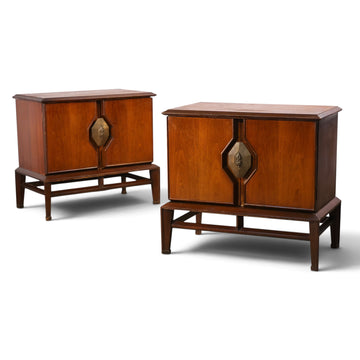
A 9-drawer lowboy in excellent condition typically sells for $800-$1,800. Nightstand pairs: $400-$800. The rare armoire: $1,500-$2,500. Prices are rising as brutalist MCM gains collector interest.
Is Lane Staccato brutalist furniture?
Yes. Lane Staccato is one of the most popular brutalist mid-century modern furniture lines, inspired by sculptor Paul Evans and characterized by heavy geometric forms and bold solid oak construction.
Related Articles
- The 10 Most Collectible MCM Furniture Brands
- Broyhill Brasilia: The Ultimate Collector's Guide
- How to Buy Vintage MCM Bedroom Furniture