Heywood Wakefield
Heywood-Wakefield stands as one of America's most celebrated furniture makers, synonymous with mid-century modern design. Their champagne blonde finishes and sculptural forms defined an era of optimism and forward-thinking design that continues to captivate collectors worldwide.
Company History
Heywood-Wakefield's story spans nearly two centuries of American craftsmanship. Founded in Gardner, Massachusetts in 1826, the company initially specialized in chairs before expanding into comprehensive furniture suites. By the 1930s, Heywood-Wakefield had emerged as a dominant force in residential furniture design, blending traditional manufacturing excellence with modern aesthetics that anticipated the mid-century revolution.
The company's golden age arrived in the 1940s and 1950s, when Heywood-Wakefield pioneered distinctive mid-century modern designs celebrating clean lines, organic curves, and the natural beauty of solid wood. Their signature champagne blonde finish—achieved through careful selection of birch and maple—became instantly recognizable and highly coveted among design-conscious homeowners and contemporary designers alike.
Production continued through the 1960s before the company gradually transitioned away from residential furniture manufacturing. Today, Heywood-Wakefield pieces represent a peak moment in American design history, valued for their quality construction, timeless aesthetic, and the craftsmanship that characterized the best of mid-century production.
"Heywood-Wakefield's champagne blonde furniture transcends trend. It represents a moment when American manufacturers prioritized beauty, durability, and honest design—qualities that resonate more powerfully with each passing year.
— Mod City Mad
Iconic Collections
Encore (1950s–1960s)
The most iconic and popular Heywood-Wakefield line, Encore exemplifies the company's mastery of mid-century modern design. Featuring sculptural forms, champagne blonde finishes, and innovative use of curved elements, Encore pieces are highly collectible and command premium pricing. Dining sets, bedroom suites, and case goods in this line remain the most sought-after by collectors. Values range from $800–$5,000+ depending on piece type and condition.
Aristocraft (1940s–1950s)
Representing the transition between traditional and modernist design, Aristocraft blends streamlined forms with sophisticated detailing. These pieces showcase beautiful wood grain and often feature distinctive hardware and leg treatments that distinguish them from other period manufacturers. Typically valued at $500–$3,000.
Streamline (1930s–1940s)
Influenced by Art Deco and the Streamline Moderne movement, this earlier collection features bold geometric forms, dramatic veneers, and architectural presence. Pieces from this era represent a fascinating chapter in Heywood-Wakefield's evolution toward modernism. Values typically range from $500–$2,500.
Design Signatures & Materials
Heywood-Wakefield's distinctive design language is immediately recognizable to trained collectors. The company's hallmark champagne blonde finish was achieved using carefully selected solid birch and maple, finished to highlight the wood's natural grain while achieving a warm, luminous tone. This finish has proven remarkably durable and patinas beautifully with age, developing a deeper honey tone that collectors prize.
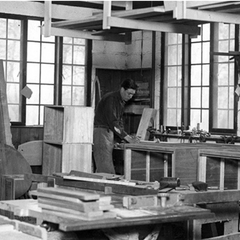
Beyond finish, Heywood-Wakefield pieces are distinguished by their sculptural forms, organic curves, and sophisticated proportions. Drawer fronts often feature dramatic wheat-colored veneers, and many pieces incorporate innovative leg treatments and hardware that demonstrate the company's design sophistication. Construction quality is exceptional throughout—solid wood frames, dovetail joinery, mortise-and-tenon construction, and hand-fitted drawers with quality slides ensure pieces continue to function beautifully decades after manufacture.
Collecting & Authentication
Authentication is straightforward with Heywood-Wakefield pieces due to consistent manufacturer stamping. Most pieces bear a clear stamp with the Heywood-Wakefield name and often include date codes that allow collectors to pinpoint production dates. Model numbers typically feature an "M-" prefix followed by numeric designations specific to each piece's design. Examine the undersides of tables, the backs of case goods, and interior drawer surfaces for manufacturer's stamps.
Original finish is highly valued; refinished pieces carry less collector premium. However, quality restoration can significantly enhance the visual presentation of pieces with damaged or deteriorated original finishes. Rarity, condition, provenance, and collection line all influence pricing. Complete suites—particularly dining sets and bedroom groups in pristine condition—command top dollar.
Our pieces are sold as-is in their authentic vintage condition. For collectors seeking restored examples, we offer optional professional restoration through our in-house workshop. All pieces ship worldwide with insurance.
Frequently Asked Questions
How can I identify authentic Heywood-Wakefield furniture?
Look for the manufacturer's stamp on the underside, backs, or interior surfaces. The stamp will clearly read "Heywood-Wakefield" and often includes production date codes and M-prefix model numbers. The champagne blonde finish, solid birch/maple construction, and distinctive sculptural forms are also reliable authenticators.
What is the typical price range for Heywood-Wakefield pieces?
Pricing varies by collection, size, condition, and rarity. Accent pieces may start around $300–$500, while dining sets and bedroom suites range from $1,500–$5,000+ for pristine examples. Encore and Aristocraft pieces command premiums over Streamline examples.
Can damaged Heywood-Wakefield pieces be restored?
Yes. We offer optional restoration services including refinishing, reupholstery, structural repair, and hardware restoration. Quality restoration significantly enhances both appearance and value when executed by experienced craftspeople.
What makes the champagne blonde finish special?
The champagne blonde finish is Heywood-Wakefield's signature achievement—a warm, luminous tone achieved through careful wood selection and finishing techniques. Original finishes develop a beautiful honey patina with age. This distinctive finish makes Heywood-Wakefield instantly recognizable and is a key factor in collector demand.
Are Heywood-Wakefield pieces investment-grade?
Heywood-Wakefield represents the pinnacle of American mid-century furniture design. Superior construction quality, iconic design, and sustained collector demand support premium pricing and consistent value appreciation. Encore and Aristocraft pieces in excellent condition have shown steady value growth over the past two decades.
Explore Related Brands
Explore more vintage pieces from our full roster of mid-century modern designers.
Frequently Asked Questions About Heywood-Wakefield Furniture
What is Heywood-Wakefield furniture?
Heywood-Wakefield is an American furniture company with roots dating to 1826, but the pieces most prized by today's collectors are from their "Modern" line produced from the mid-1930s through the early 1960s. This Streamline Modern furniture—made primarily in Gardner, Massachusetts—is instantly recognizable by its blonde solid maple or birch construction, smooth flowing curves achieved through steam bending, and clean minimalist forms that aligned America's furniture taste with the emerging Scandinavian modern movement. The Modern line was designed primarily by Gilbert Rhode and Leo Jiranek and sold widely through major department stores throughout the postwar era.
How do I identify vintage Heywood-Wakefield furniture?
Authentic Heywood-Wakefield Modern pieces carry several reliable identifiers. The most definitive is the Heywood-Wakefield Eagle mark—a stampings of an eagle that came into use in 1949—found on the underside of tables, inside the top left-hand drawer of case pieces, or on the bottom stretcher of headboards. Earlier pieces (pre-1949) may carry a simpler rectangular stamp reading "Heywood-Wakefield" or a paper label. The characteristic blonde wood tone—marketed as "Champagne" or "Wheat" finish—and the distinctive steam-bent curves are strong visual identifiers, though finish color alone is not sufficient for authentication.
What finish colors did Heywood-Wakefield use?
Heywood-Wakefield produced their Modern line in several named finish colors over the years. The most common and most collectible is Champagne—a light, warm golden-blonde tone that has become synonymous with the brand. Wheat is a slightly cooler, paler blonde that was popular in the 1950s. Rio is a darker, amber-toned finish introduced later in the line's production run. Toffee is a warm medium brown sometimes found on later pieces. Champagne finish is generally most sought-after, and refinished pieces that deviate from original tones may sell for less than those retaining their original factory finish.
What are the most sought-after Heywood-Wakefield pieces?
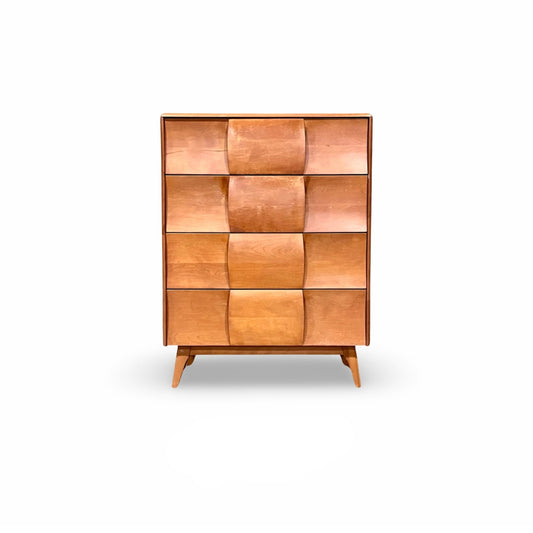
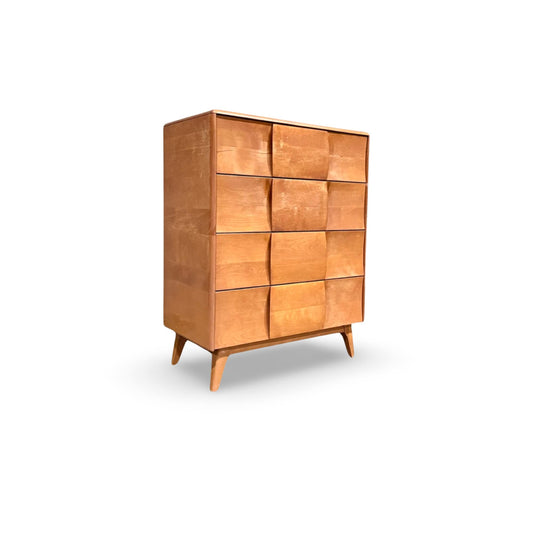
Among collectors, the most desirable Heywood-Wakefield pieces include the Kohinoor bedroom suite (featuring distinctive wishbone pulls and flowing drawer curves), Streamline and Encore series dressers and highboys, the iconic M153-M154 china cabinet with glass sliding doors, and buffet/credenza pieces with original hardware intact. Complete matching bedroom suites command significant premiums over individual pieces. Rare pieces like room dividers, custom-order configurations, and the less common dining pieces are especially prized.
Is Heywood-Wakefield furniture valuable?
Heywood-Wakefield Modern furniture has appreciated considerably as mid-century collectors recognize its historical significance and design quality. Well-preserved pieces in original Champagne or Wheat finish with intact hardware command the strongest prices. Pieces that have been improperly refinished—particularly with stain or dark finishes that obscure the characteristic blonde wood—are worth significantly less. Professional restoration to original finish colors is possible and can substantially restore value. The brand's growing recognition at auction and in design publications continues to support collector interest.
Want to learn more? Read our in-depth Heywood Wakefield Collector's Guide — covering history, authentication, value, and buying tips.
-
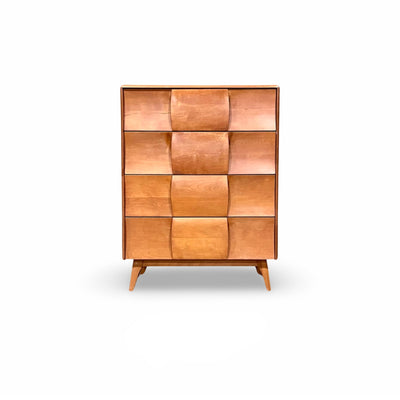
Heywood Wakefield Kohindoor Vintage Mid Century Modern Highboy Dresser c. 1960s
Vendor:Heywood WakefieldRegular price $1,895.00 USDRegular priceUnit price per -
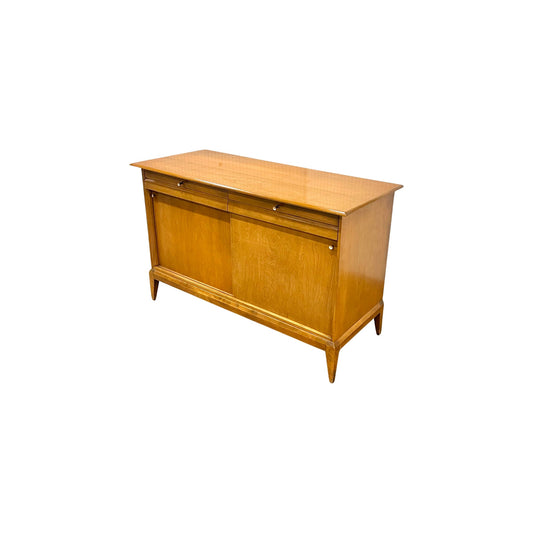
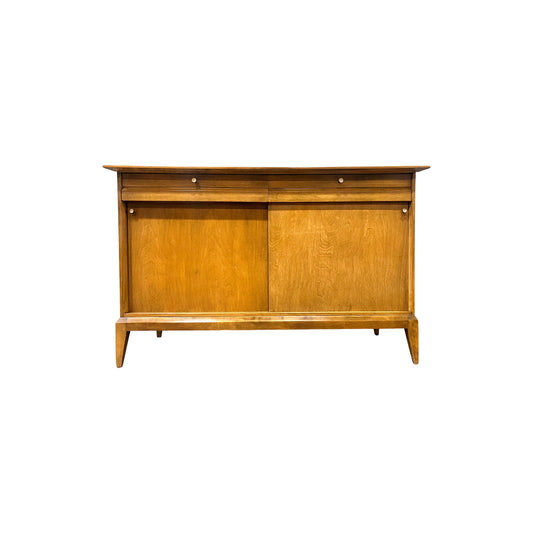
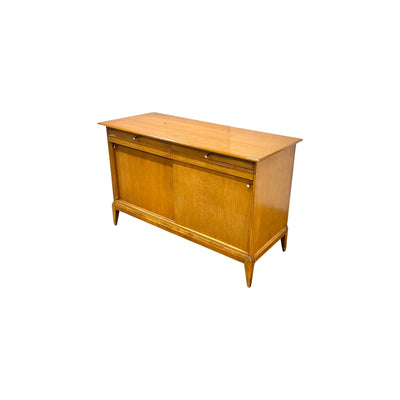
Cadence by Heywood Wakefield Vintage Mid Century Modern Compact Credenza Media Center c. 1960s
Vendor:Heywood WakefieldRegular price $1,595.00 USDRegular priceUnit price per